


Theosis: CSWR Annual Publication 2025-26
Theosis, the CSWR’s Annual Publication
Volume 3 | 2025-26


We are delighted to present Volume 3 of Theosis, the annual magazine of Harvard Divinity School's Center for the Study of World Religions.
This new collection features thought-provoking essays, interviews, visual art, and photography that emerged from our scholarly community over the past year. Building on our commitment to interdisciplinary inquiry, Theosis showcases research spanning diverse spiritual traditions, cutting-edge academic work, and creative collaborations that extend far beyond traditional academic boundaries.
"Theosis embodies the spirit and commitment of the Center to make scholarly work accessible to all. It is not hidden behind paywalls or reserved solely for academic publications and conference rooms. Rather, it is presented here in a way that is inviting and compelling, reflecting our belief that the fruits of scholarship should be shared widely and creatively." Read full Note from the Editor, Gosia Ewa Sklodowska
Download Volume 3 (2025-26) (PDF)
Publication Highlights
Enjoy reading a selection of research, interviews, and more from Theosis.
Director’s Letter
"It has been another incredible year here at 42 Francis Avenue. This is my penultimate year as the Center’s Faculty Director, and so I am looking back on eight years and ahead to one more."

Studying Rudolf Steiner at Harvard
"In many ways, anthroposophy is a spiritual movement with the soul of a university."

Thoreau’s Dream Mountain
“Thoreau’s visionary practice is to let actual landscapes become ideal, imaginal landscapes, and his writerly practice is to try to render that transformation into words.”

The God in the Mirror
“Divinity could now be seized before it was conferred. Matsudaira’s statue, Yamazaki’s mirror, and Honda’s deathbed oath took shape within a developing countertradition that treated transcendence as the hard-won product of self-directed ritual labor.”

Loanwords along the Silk Road
“Human languages are heterogeneous languages, and loanwords are the spoken, read, and written vestiges of language contact and, therefore, of human contact.”

Imagining Atlantis in the Americas
“Revisiting the myth shows that the Americas have long served as a mirror for global reflections on history and civilization, a legacy that continues to inform debates about identity, science, and the uses of the past.”

A Life Between Worlds
“Human beings stand with one foot in the embodied, finite world, and one foot in what has come to be called the imaginal…the realm just beyond this one, more fluid and permeable.”

Practicing Transcendentalism

Psychedelic Facilitation Training in the United States: A Landscape Analysis

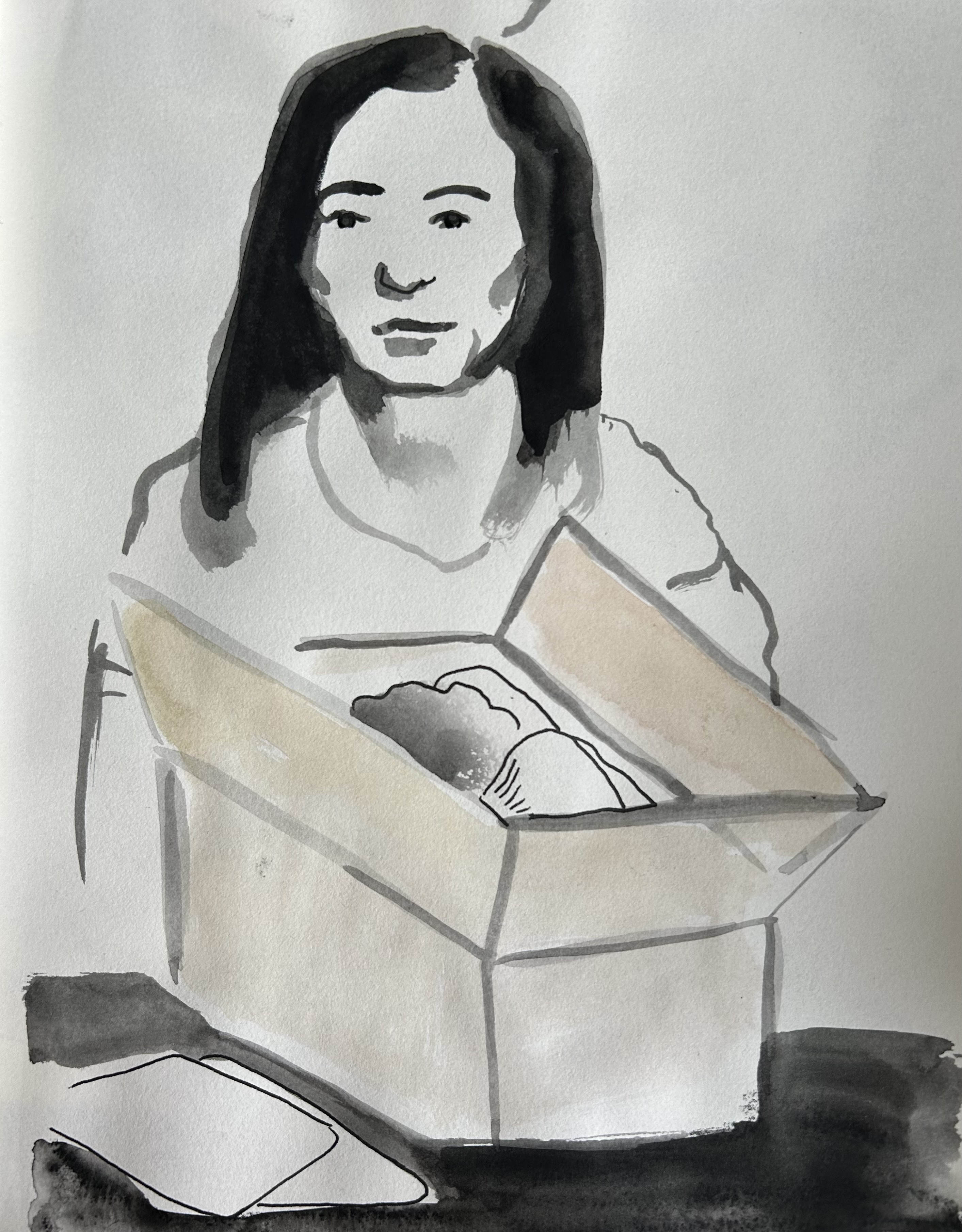
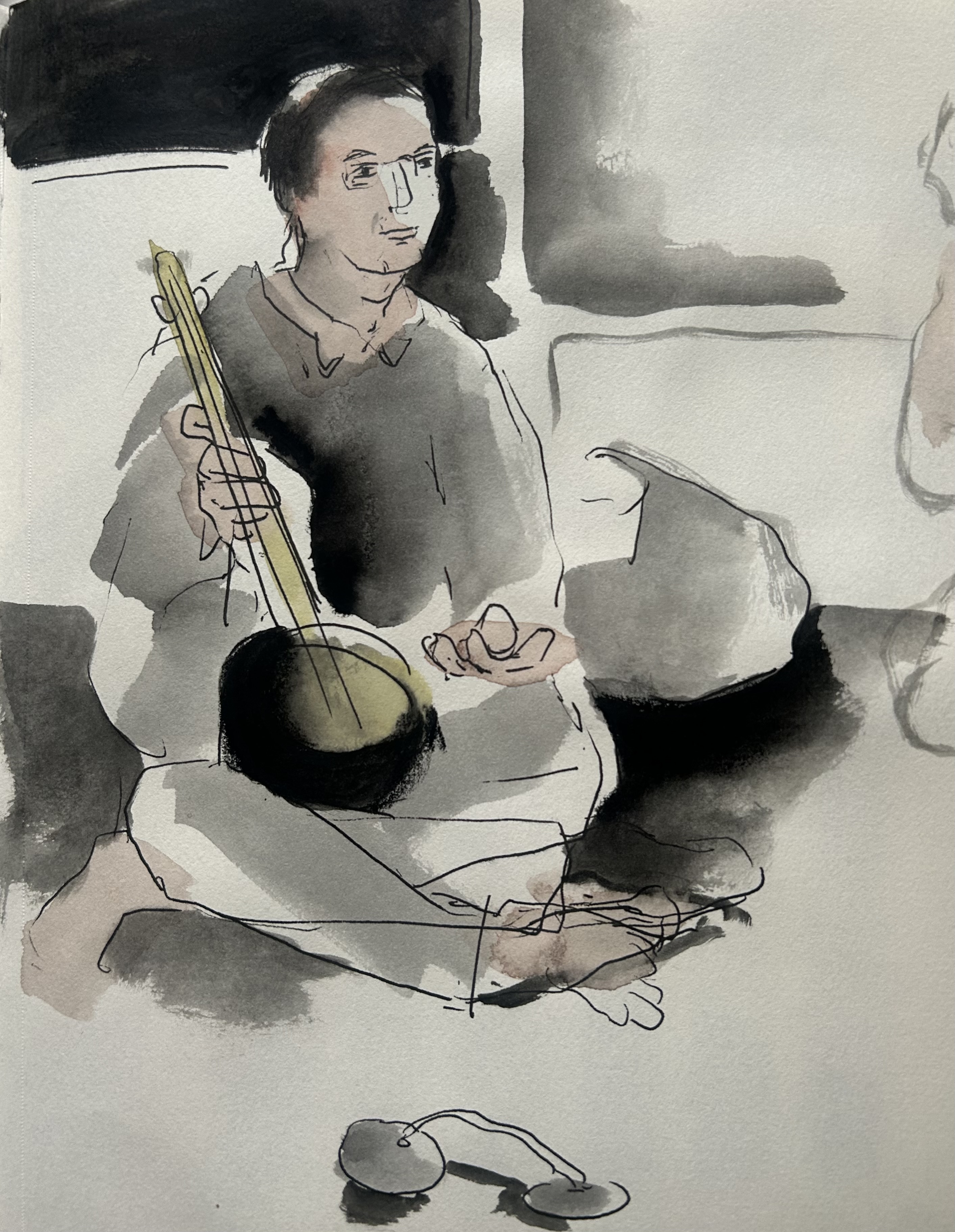
Behind the Green Doors: Residential Life at the Center for the Study of World Religions
Visual artist Barbara Philipp joined the Center’s residential community in fall 2025. Living among fellows and their families, she turned her attention to the textures of daily life within this shared space: fleeting encounters, emerging relationships, and the quiet formation of community.


Highlights 2025-26
August
The Center welcomed a new cohort of visiting scholars, artists, and researchers working across religious studies, anthropology, music, and the arts, setting the stage for a year of interdisciplinary exchange.

September
Fall programming opened with the exhibition Sacred Plants of the Muysca, foregrounding Indigenous knowledge and relationships to land, plant life, and community.
The workshop “Tending to the Spiritual” brought clinicians and researchers together to explore the role of spiritual care in psychedelic-assisted therapy.

October
Alongside the Transcendentalist Concord gathering and The Pearlsong launch, reading groups on Transcendentalism, Western esotericism, and Psychedelics and Spirituality created shared spaces for sustained inquiry.

November
Artist Donna Torres led a hands-on workshop exploring plant-based artistic practices, inviting participants to engage the aesthetic and symbolic dimensions of plant life.
In collaboration with Wonderstruck, the Center hosted a conversation with Mark Vernon on imagination and the “vertical dimension” of human experience in contemporary life.

December
The Gnoseologies series featured conversations on esoteric knowledge, pedagogy, and identity, including a reconsideration of Helena P. Blavatsky’s philosophical contributions.
A second “Tending to the Spiritual” workshop extended earlier discussions into religious and personal-use contexts, broadening the scope of the Center’s work in this area.

January
Poet-in-residence Jane Hirshfield offered a widely attended public reading and workshop, engaging questions of ecology, justice, and the inner life.

February
The Center marked the publication of Porphyry of Tyre on Theology and Theurgy, the second volume in its Texts and Translations of Transcendence and Transformation series, advancing its commitment to making foundational texts newly accessible.
A three-part workshop, “Archival Methods: Finding the Sacred and the Profane in the Psychedelic Archive,” invited participants to the Ludlow-Santo Domingo Library, where the world’s largest collection of psychedelic literature is housed at Harvard.

March
The Center hosted its annual distinguished lectures in Global Christianity, Jewish Studies, and Hindu View of Life, bringing leading scholars into conversation with major questions in religion, modernity, and public life.
Lectures featured: “Forging the Monotheistic Triangle: Jews, Arabs, Christians and the Promises of European Modernity,” with Prof. Susannah Heschel; “Recasting the Hindu Goddess in an American Landscape,” with Prof. Tracy Pintchman; and "The Light from the Other Shore”: The Rise of Public Christianity in Contemporary China, with Prof. Xi Lian.

April
The spring exhibition “We Beat the Poison Clearing Drum” featured the work of Michael Prettyman, Artist-in-Residence, exploring the relationship between painting, perception, and the experience of the sacred.
Prettyman’s special workshop “A Long Way Home” invited participants to explore mysticism as a recurring dimension of human experience, and to reflect on the resonance of deeply felt experiences across traditions.

May
Researchers released new episodes of their long-running podcasts Pop Apocalypse and Om-Gnosis, extending the Center’s engagement with contemporary scholarship on esotericism, religion, and alternative spiritualities.

CSWR in Numbers
61
postdoctoral fellows, research associates, affiliates, visiting scholars, students assistants, and staff
5,421
in-person and virtual attendees of CSWR public programming
98
public offerings
including conferences, annual and guest lectures, art exhibits, musical and theatrical performances, reading groups and workshops
63
research reflections and guest essays
19
podcast and videocast episodes
within the Pop Apocalypse and Om-gnosis series
30,430
podcast listens
across social media platforms: LinkedIn, Instagram, Facebook, and YouTube (65% increase since last year)
79,462
YouTube views
across social media platforms: LinkedIn, Instagram, Facebook, and YouTube (65% increase since last year)
CSWR in the Words of Our Affiliates
Marco Pasi
CSWR Visiting Scholar
"It is hard to imagine a better environment for a scholar of religion than the CSWR. The leadership and the entire staff are there to make you feel at home, and the fact that I was living at the Center while spending my time there has made that experience even more meaningful. The sense of common purpose, amid the diversity of interests and backgrounds of the fellows, creates a space where scholarly creativity and intellectual rigor go hand in hand. And then of course if one also considers access to the extraordinary facilities of the Divinity School, with its beautiful library, it is easy to understand why my time at the Center was among the most rewarding of my academic life. Credit goes to all those who work hard at the Center to make the beautiful vision with which it was created many years ago a vibrant reality for today’s scholars."

Michael Prettyman
CSWR Artist-in-Residence
"During my month as Artist-in-Residence at the Center for the Study of World Religions this April, I experienced a rare and meaningful convergence of art, scholarship, and spiritual inquiry. What made the residency so extraordinary was not only the freedom to continue my studio work, but the remarkable openness and support extended by the staff, visiting scholars, and students throughout the Center. There was a genuine willingness to engage the arts as a legitimate mode of inquiry, something many artists have been longing for, if impatiently.
CSWR is a kind of refuge. The support and intellectual generosity I encountered created an atmosphere where unexpected connections could emerge naturally, and I left with the strong feeling that many of the relationships formed there will continue well beyond the residency itself. Teaching a version of my seminar on mysticism and creativity became one of the most meaningful experiences of the month. During the second session, the group entered into thirty minutes of silent drawing together, and afterward no one wanted to leave; least of all me.
The residency also marked an important turning point in my studio practice. During my time there, I began five new paintings and found the conceptual and emotional direction for the next body of work. As spring arrived in Cambridge, the campus itself began to feel charged with a strange and almost dreamlike presence. Walking alone through Harvard Yard well past midnight, surrounded by silence, old brick, and sudden-flowering trees, the University often felt less like an institution than a living atmosphere of memory and inquiry. Even the rabbits around the Divinity School began to seem… not like regular rabbits. What remains with me most strongly is a renewed belief that art can function not merely as expression, but as a serious and vital path of investigation into mystery, perception, and human experience."

Jane Hirshfield
Poet-in-Residence
"The eighteen days I spent at the CSWR in January feel, in retrospect, like a spiral-armed galaxy of conversations—within the Center, with visiting artist Sarah Schorr, Gosia Sklodowska, AmarAtma Khalsa, Sherah Bloor, Charles Stang; beyond it, with Terry Tempest Williams, Marshall Ganz, Barry and Gretchen Mazur, three generous curators, even the genetic-engineering biologist who walked me on snow-covered paths to the Harvard Museum of Natural History’s front door…. I’ve carried home seeing the Vantablack and Indian Yellow of the Fogg’s Pigment Collection; the Houghton Library’s first printed Galileo; the Woodberry Poetry Room’s memorial to Fanny Howe; and a blizzard. While in residence, I gave a reading and hosted a discussion that could have gone on hours longer. With Sarah, I circumambulated Walden Pond, frozen and silent in the day’s last light; with Gosia and Sarah, visited Margaret Fuller’s grave. I also found a way to set down at last some thoughts I’d wrestled with for months, on humility and its connection to both not-knowing and awe. The CSWR welcomed me into something thrilling and perfect: a life between monastery and agora. Those in residence may change year to year, but it must always be a place of magical feasting—a banquet of ideas and explorations, of actual meals and of intentions toward larger understanding and the larger good, a banquet that keeps refilling itself with new and astonishing courses."
Erik Davis
CSWR Visiting Scholar
“There are certain advantages to working as an indepen-dent scholar, but one also finds oneself longing for certain features of academic life. These include: the glories of an excellent library; ready access to campus galleries and events; opportunities to meet and share your work with colleagues; dedicated research support; and especially
the ability to meet younger scholars within one’s fields of interest. While the sense of deep con-tinuity that has traditionally been a feature of the university is currently under assault by many factors, there remains a deep current to insti-tutions like the Harvard Divinity School that is noticeably absent from the fragmented milieu of public intellectual life and research. So I was very happy and honored to receive an invitation to participate as a visiting scholar at the CSWR in the fall of 2025. The invitation alone served as the sort of professional confirmation rarely bestowed on independent researchers (at least this one!)."

Jane Sheldon
Artist-in-Residence
"I feel deep gratitude at having joined the diverse network of researchers and artists associated with the Center for the Study of World Religions. I’ve twice been a visitor at the Center, this last semester in residence for a month. On both occasions, I made some quite profound connec-tions to other scholars there, deeply enriching my creative process and providing nourishment to various projects I continue to work on. It’s a very special community of bold minds and generous hearts and I look forward to the ongoing fruits of our connection."

CSWR in the Words of Program Attendees
TENDING THE SPIRITUAL WORKSHOPS SEPTEMBER and DECEMBER 2025
I learned how valuable conscientious and experienced facilitators are and how much knowledge they accumulate before they have the capability to hold space. In short, it reinforced my own cultural humility and deepened my commitment to support other people in their learning around psychedelics, keep an open mind, and listen carefully to others.
Such soulful connection, personally moving... Helped lessen my isolation and think more broadly about how I work--spirituality is relational.
Belinda Eriacho is an elder who has such a facility for communicating complex systems in digestible ways. I found myself reflecting on my own approach to community, ownership, and respect for Indigenous wisdom in a new way.
POETRY READING WITH JANE HIRSHFIELD JANUARY 2026
I first encountered Jane Hirshfield years ago through an interview on NPR’s On Being. She spoke about the fullness of things—how we are shaped by complementary and opposing forces, and how easily we overlook the insights they offer in the midst of daily life. My first reaction was simple: here is someone I want to return to and learn from.
During the Q&A following her reading at CSWR, she reflected on how thinking and feeling are not separate capacities, as we are often taught, but intertwined and interdependent—keys to living well and generously. This, as she has taught and so beautifully demonstrated, is the work of poetry.
James King, Ed.M ’97
ARCHIVAL METHODS: FINDING THE SACRED AND THE PROFANE IN THE PSYCHEDELIC ARCHIVE WORKSHOP, FEBRUARY - MARCH 2026
My interest is mainly in Jewish ethics and chaplaincy, but I spend a lot of times in archives. To get the chance to be here, and be in physical contact with some of the physical material at Harvard and with the scholars who know it best, it was a great place to do that. Maximus Levinsky, MDiv ’27
I am working on issues around psychedelics and spirituality. It’s been a fantastic experience, I learned not only about the archive itself, but about methods and approaches to do work in archives that is going to be invaluable, not only for this project, but for future projects. Stuart Sarbacker, CSWR Visiting Scholar, Professor of Comparative Religion and Indian Philosophy, Oregon State University