


Digital Display: Sacred Plants of the Muysca – In the Words and Photos of Community Members
The CSWR is delighted to feature the work of the Muysca community of Suba in Bogotá, Colombia, showcasing their profound relationship with sacred plants and the vital role these traditional medicines play in their ongoing struggle for territorial sovereignty and cultural revitalization as an urban Indigenous community.
Select artwork will be on display at the CSWR between September and December 2025.
Artists' Statement
Sacred plants are woven into the fabric of the everyday lives of Indigenous peoples. This exhibit explores the profound connection between the Muysca community of Suba in Bogotá, Colombia, their sacred territory, and their plant medicine knowledge systems. Emerging from years of participatory-based collaboration, this photovoice exhibit features photographs taken by both the researcher and community members, offering an intimate and relational perspective on the cultural practices connected to these sacred plants. Among the plants featured are tobacco, brugmansia, and coca—each integral to the community's spiritual and healing traditions. Through the eyes of the Muysca people, who have undergone displacement and witnessed the concretization of their territory, these photographs reveal how the use of sacred plants is an embodied political practice integral to their defense of territorial sovereignty as well as their Indigenous revitalization process. These visual narratives highlight not only the vibrancy and fortitude of the Muysca people, but also their struggles as an urban Indigenous community without recognized land rights as they work to protect their heritage and heal through plant medicine within a rapidly growing and desacralized cityscape. Weaving together themes of healing and cultural survival, the exhibit provides a powerful visual narrative of the Muysca’s resilient spirit in preserving their traditions and defending their ancestral land.
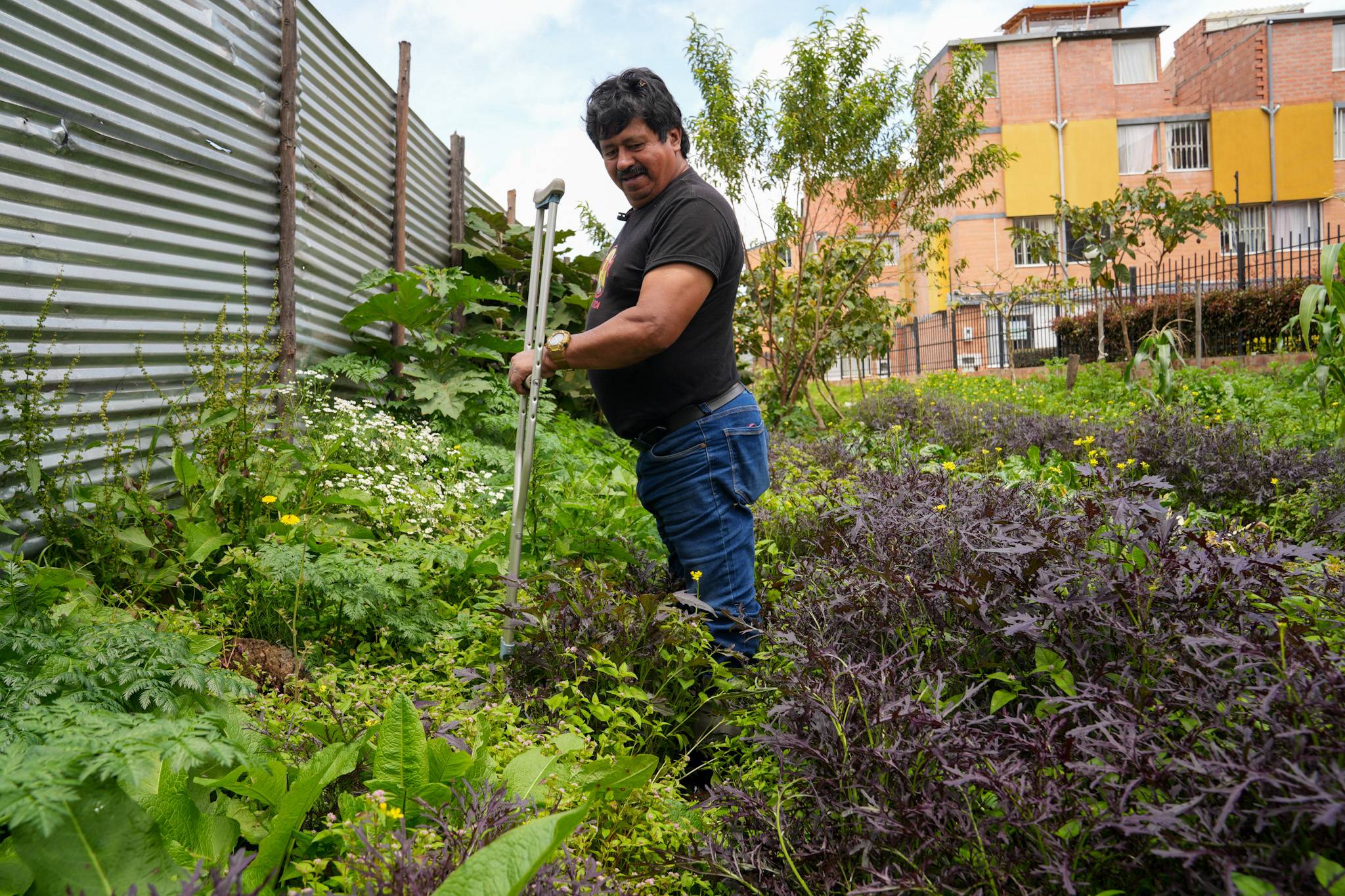
Occupation as Ceremony: Reclaiming the Land
Author: Andrea Sánchez-Castañeda
Location: Muysca Elders’ Center for Thought, Suba, Bogotá, Colombia
The land of Suba, once silent, breathes again—revived through the determination of the elders who reclaimed it as an act of sacred occupation. Among the medicine plants, their acts of cultivation offer more than sustenance: they restore memory, active presence, and the deep connection between land and their ancestors. In the photograph, one such guardian stands tall:
Jaime Nivia, elder and leader of the Agricultural Council, tending to hycha uaia (Mother Earth) with care and intention.
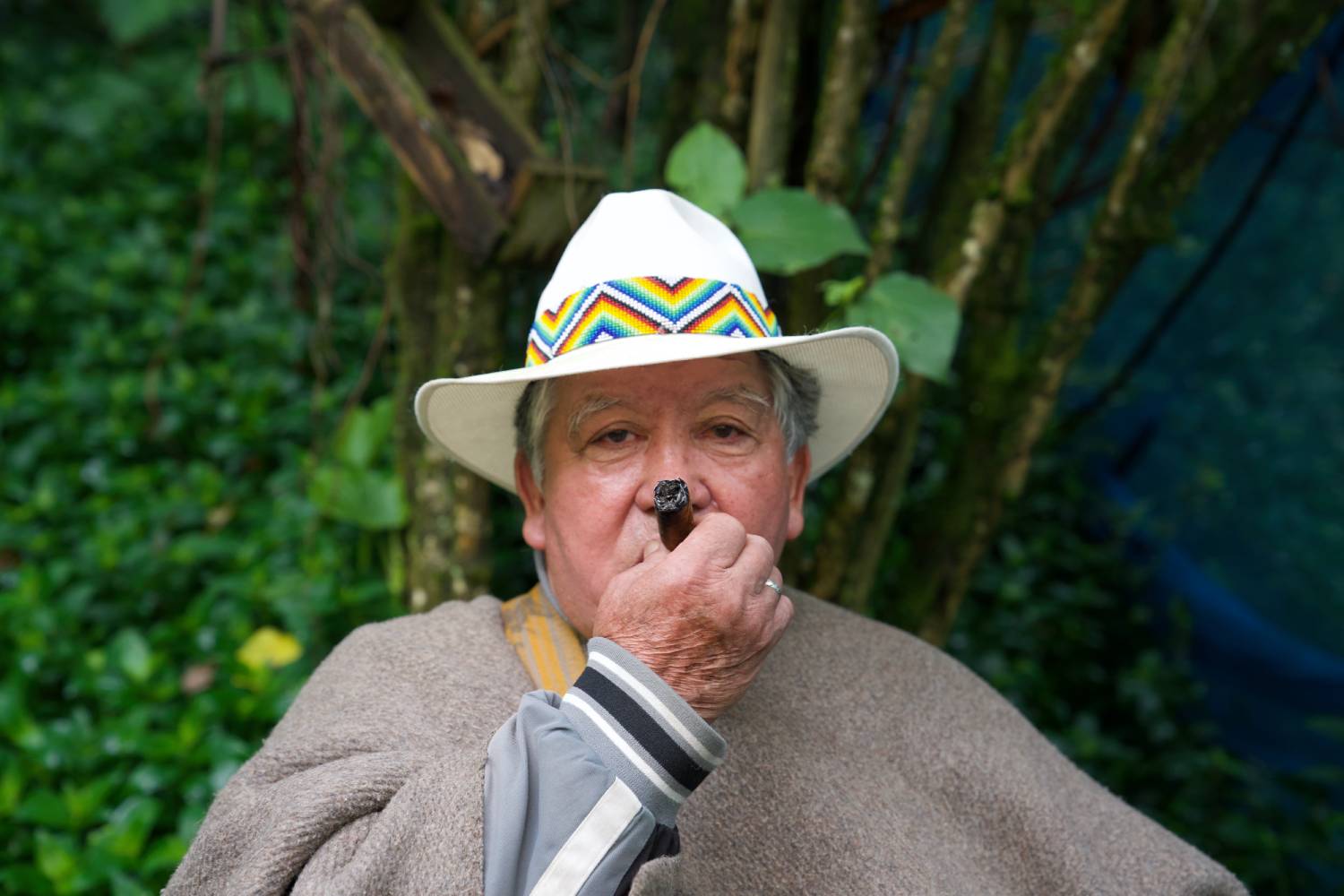
Walking the Medicine Path: Abuelo Ignacio and the Return to Plant Wisdom
Author: Andrea Sánchez-Castañeda
Location: Santuario, Suba, Bogotá, Colombia
In the quiet rhythm of shared tobacco, Abuelo Ignacio—Muysca elder, healer, and teacher—shares the story of a life rooted in medicine. Taught by his grandfather, he has become a guiding force in the revitalization of Muysca healing traditions, leading efforts to restore sacred plant medicine as a living practice. Through ceremony, conversation, and care, he tends not only to the body, but to the spirit and memory of his people.

Spiritual Payment at Teusacá Lagoon
Author: Camila Yopasa
Location: Teusacá Lagoon, Colombia
Zaita (knowledge keeper), David Chizaba, is pictured here during a pagamento ceremony at Teusacá Lagoon, one of the sacred bodies of water for the Muysca people. In this ceremony, offerings are made to the lagoon and the entities that inhabit it, and the space is harmonized using tobacco medicine in preparation for a new cycle of authorities.

Offering Ceremony at the Teusacá Lagoon
Author: Jose Piravaguen
Location: Teusacá Lagoon, Colombia
Governor Jeison Triviño Cabiativa is performing his pagamento—a ceremonial offering to the land, ancestral elders, and spirits, both human and non-human—to give thanks for the new community authorities. This gesture represents his spiritual and communal commitment, reaffirming the bond between the leaders and the sacred forces of nature present in this ancestral territory.

Medicine Offering at the 2025 Authority Inauguration
Author: Camila Yopasa
Location: Mirador de los Nevados Park, Suba, Bogotá, Colombia
During the 2025 inauguration of authorities, Zaita (knowledge keeper), Utigua Yopasa, offers sacred medicine to Armando Caviativa, the new elder authority. This gesture symbolizes the transfer of wisdom, commitment, and spiritual protection as he begins his path as a guide for the people.

Cultivating Plant Relations
Author: Andrea Sanchez-Castaneda
Location: Suba, Bogotá, Colombia
Chavelita contemplates a thriving cannabis plant she has nurtured for several years. While cannabis and other medicinal plants are not native to the lands of Suba, the Muysca have embraced them, forming relationships of healing and care. Chavelita offers the plant’s leaves and flowers to Muysca Zaitas (medicine people), who prepare syrups, ointments, herbal infusions, and other medicinal remedies.

Food as Medicine
Author: Andrea Sánchez-Castañeda
Location: Muysca Elders’ Center for Thought, Suba, Bogotá, Colombia
Elder Sixto Niviayo sees his garden as a place of healing, where the plants used daily in the kitchen are just as powerful as the revered plantas de poder like tobacco and Brugmansia. To him, food itself is medicine—each leaf, herb, and vegetable carries the strength to nourish body and spirit.
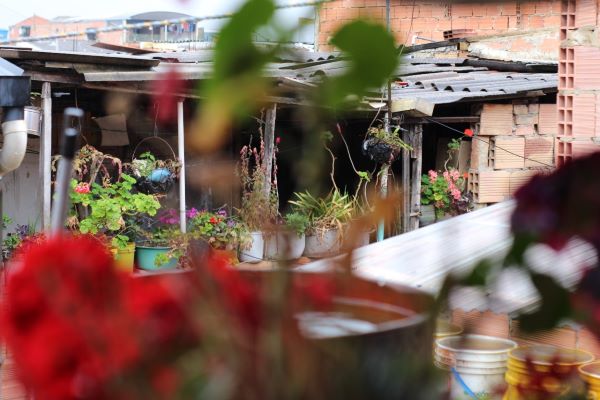
Gardens on the Meandering Streets of Suba
Author: Nicolle Torres
Location: Rincon neighborhood, Suba, Bogotá, Colombia
From the rooftop of a Muysca house belonging to the Niviayo Cabiativa clan in Suba Rincón rises a terrace that resists extinction. The ancient practice of cultivation adapts to concrete: gardens that once breathed in the earth now sprout from repurposed containers—barrels, buckets, and pots that preserve the soil passed down through generations. Muysca grandmothers, who are guardians of plant knowledge, have safeguarded traditional memory in these vessels, where medicinal plants such as calendula, celery, thyme, lemon verbena, spearmint, fennel, lemon balm, aloe, rue, rosemary, sage, and others now flourish. Recycled paint barrels are also used to collect rainwater that is essential for daily care. In this way, both agricultural and cultural memory survive on the rooftop, resisting the advance of concrete with roots that refuse to give up.
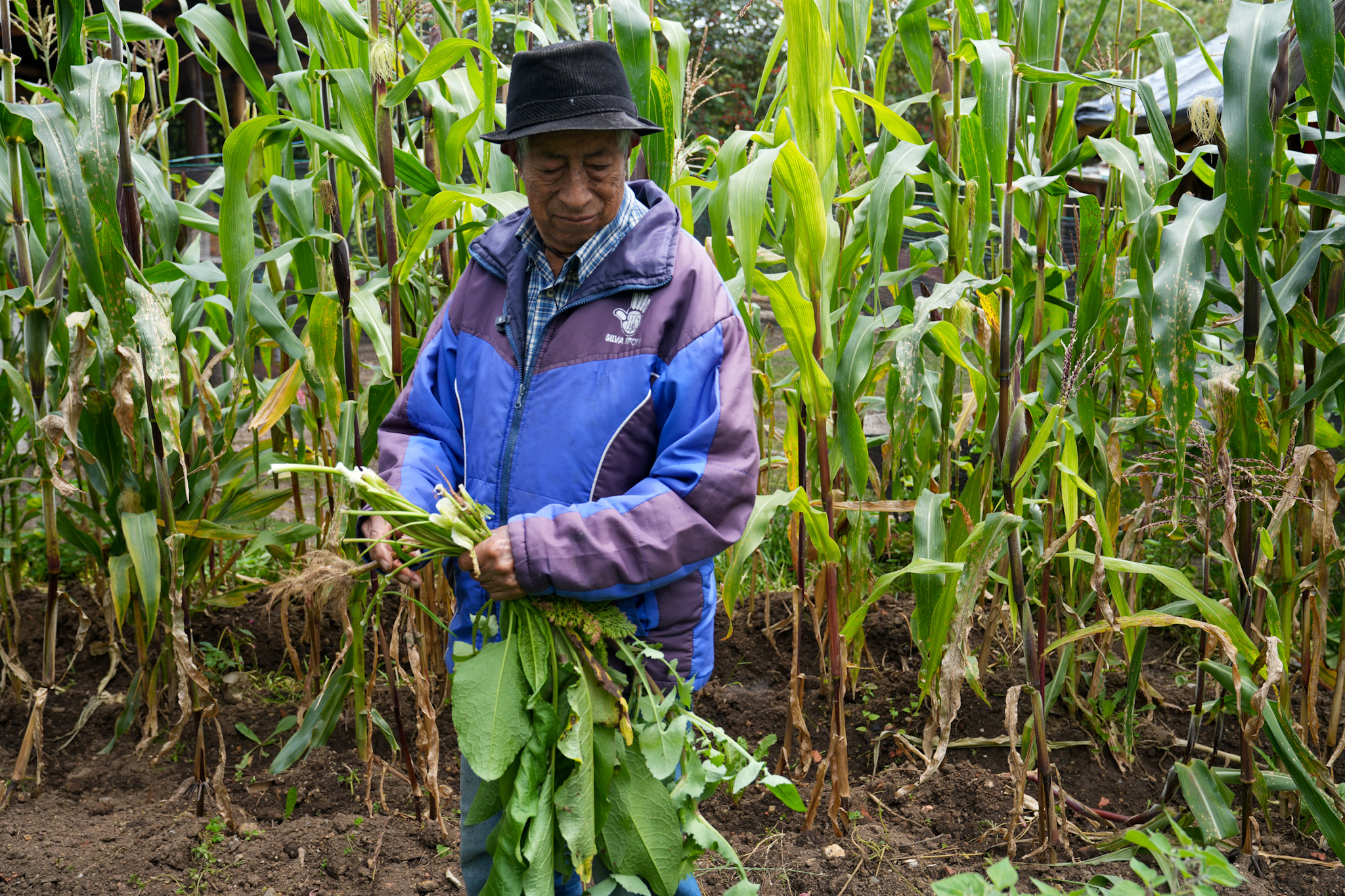
Where Memory Takes Root
Author: Andrea Sánchez-Castañeda
Location: Muysca Elders’ Center for Thought, Suba, Bogotá, Colombia
Efraín Nivia, 93-year-old elder of the Muysca people, stands as a living root in the changing soil of Suba—a quiet guardian of memory and tradition. Each day, he returns to the garden, where his hands speak the language of the land, reviving the spirit of his ancestors with every leaf he gathers. In a locality reshaped by time and loss, Efraín Nivia embodies resistance—not in protest, but in presence.

Suas Agusquana - Ceremonia de cambio de fuego
Author: Jose David Piravaguen
Location: Santuario - Cusmuy
This image was taken in June 2025, during the trasnocho (all-night vigil) for the change of cycle, a sacred space where the Muysca community of Suba gathers to share words, guidance, and medicine. In this picture, we see the elder Yeison Yopasa alongside his daughter, a medicine walker. The vigil takes place during the change of the wind cycle. It is a moment of spiritual gathering to harmonize ourselves and, through cleansing, begin a new cycle in connection with the spirituality of our people and territory.

Ambira and the Legacy of Women Healers
Author: Andrea Sanchez-Castaneda Location: Suba, Bogotá, Colombia
Elder and Zaita (medicine woman) Blancanieves has been preparing ambira medicine since childhood, having learned the recipe from her grandmother. She was taught not only how to cultivate the plants with the intention of healing, but also the days-long cooking process involved in its preparation. Her ambira contains tobacco along with a variety of medicinal plants—kept secret, as the recipe is reserved for the medicine women of her lineage. This picture was taken at her home, where she welcomes and cares for patients.

In the Arms of Rue: A Mother’s Memory
Author: Andrea Sánchez-Castañeda
Location: Muysca Elders’ Center for Thought, Suba, Bogotá, Colombia
Kneeling beside the sacred rue plant, Martha Nivia tends not only to leaves, but also to memory. As a community elder, Martha expresses her relationship to this plant as being more than medicine; it is a bridge to her mother, serving as a conduit that binds the present to the past. The scent, the texture, and the presence of rue carry her into a maternal embrace that transcends time.
Through each gentle touch, she reconnects with the spirit of her mother, weaving love, grief, and healing into the soil. This is not merely care; it is communion.
Principal Researcher
Paola Andrea Sánchez-Castañeda is a cultural anthropologist working in the fields of critical Indigenous studies and urban environmental thought, with a focus on Latin America. For over eight years, she has walked alongside the Muysca of Suba—an urban Indigenous community in Bogotá, Colombia—collaborating on research that explores the deep entanglements between indigeneity, territory, nature, and the sacred.
Blending ethnography with visual storytelling, Andrea employs visual methodologies as both a research tool and a means visualizing the community’s lived struggles, sacred practices, and cosmologies. Her work opens space for seeing and sensing Indigenous presence in urban space.
Andrea earned her PhD in Anthropology and her MA in Religious Studies from Florida International University. During her postdoctoral fellowship at CSWR, she has continued her collaboration with the Muysca, documenting the ceremonial use of sacred plant medicines and their vital role in Indigenous revitalization and territorial defense in the city of Bogotá.
Collaborators
Nicolle Torres
Indigenous Muysca woman from the territory of Suba, with a degree in Spanish and Languages from the National Pedagogical University of Colombia. She has specialized training in the Muysca language (from the Caro and Cuervo Institute) and political education for Indigenous women (from Universidad del Rosario). She is currently a master’s candidate in Linguistics at the National University of Colombia.
Her work has focused on cultural management, the teaching and revitalization of the Muysca language, as well as research and activism related to Indigenous education, oral traditions, Indigenous poetry, and traditional Muysca music. She has led pedagogical and community processes in various territories of the Association of Muysca Indigenous Councils, with a particular emphasis on teaching the native Muysca language.
She has extensive experience in Indigenous education, ethno-education, and linguistic documentation, actively participating in research groups at public universities in Colombia. She currently works as an ethnic specialist for the Bogotá District Network of Public Libraries (BibloRed) and as a Muysca language instructor in the Department of Linguistics at the National University of Colombia.
Camila Yopasá
Indigenous Muysca woman from the ancestral territory of Suba, belonging to the Yopasa Niviayo clan. She is a graphic designer who graduated from Universidad Santo Tomás, with solid experience in community communication, design with an intercultural approach, and the revitalization of ancestral knowledge. Her work has been deeply linked to processes of identity strengthening through visual culture, photography, audiovisual media, and Indigenous education.
She has worked with the National Indigenous Organization of Colombia (ONIC), supporting communication processes led by Indigenous youth, and is currently part of the team at the National Commission of Indigenous Territories (CNTI), where she contributes to the defense of the territorial and cultural rights of Indigenous peoples in Colombia.
She is an authority within the Muysca Indigenous Council of Suba and has led community projects focused on Indigenous communication, the revitalization of the Muysca language, and cultural memory. Her work has been recognized both nationally and internationally, having won second place in the 2024 photography contest organized by the World Intellectual Property Organization (WIPO), and she has been invited to speak at high-level events such as the Symposium on the Repatriation of Indigenous Heritage organized by Colombia’s Ministry of Foreign Affairs, and the Latin American Design Meeting in Buenos Aires, Argentina.
Her political, artistic, and community-driven approach establishes her as a young Indigenous leader with a critical and creative vision, committed to defending territories, promoting self-determined education, Indigenous communication, and the cultural survival of Indigenous peoples.
Jose Piravaguen
Jose is a member of the Muysca community of Suba, from the Yopasa Niviayo clan. He is a professional photographer and multimedia producer who has served as one of the leaders of the communication council of the Muisca Cabildo and producer of the first Muisca radio station, Nohosca: Raices Muiscas, Voces de Suba.