


Practicing Transcendentalism
Megan Marshall returns to the lives and words of the Peabody sisters to ask what use Transcendentalism is now. Through their example, Marshall finds that the movement’s enduring promise lies in its demand that thought become deed.
By Megan Marshall, Guest Contributor. Edited by Russell Powell
On a recent Friday in late September, unseasonably warm as so many New England days are now, I drove up to Salem for the premiere of my friend Scott Wheeler’s trio for violin, cello, and harp, Insomnia Flowers.1 The music was glorious in Samuel McIntire’s stately Hamilton Hall, reverberant in the audience members’ collective body heat, sealed in as we were by storm windows already in place. Leery of an hour-long drive home in the dark, I stayed over in a hotel on the harbor and woke early the next day to walk Salem’s streets before the pre-Halloween Saturday throngs of eerily clad revelers overtook them and the temperature began to rise again.
Inexorably, I was drawn to Howard Street Cemetery, hard by the Salem Jail, the oldest active penitentiary in the country at the time of its closing in 1991 after nearly 200 years. (The jail was reopened as luxury apartments in 2010.) Not for nothing had Nathaniel Hawthorne written in the opening pages of The Scarlet Letter, composed two blocks away in 1849: “The founders of a new colony, whatever Utopia of human virtue and happiness they might originally project, have invariably recognized it among their earliest practical necessities to allot a portion of the virgin soil as a cemetery, and another as the site of a prison.”2

When I first visited Howard Street, there were still prisoners, by then protesting their crude living conditions, housed next door. I was hunting for the grave of Elizabeth Palmer Peabody, known as Eliza, the mother of the three Peabody sisters whose lives I researched and wrote about from 1985 until the completion of my book in 2005. When Eliza died in 1853, I’d read in letters from the time, her surviving children planned to bury her at Harmony Grove, Salem’s new garden cemetery overlooking the city, a fitting tribute for the matriarch who’d raised such influential daughters. By then, Sophia and Mary were married to Nathaniel Hawthorne and Horace Mann. Elizabeth, the eldest and her mother’s namesake, was closing up her famous bookshop and “caravanserai” to the Transcendentalists at 13 West Street in Boston and contemplating her next moves.3
But there was no trace of Eliza in Harmony Grove’s register. Salem’s Town Records finally revealed that she’d been buried alongside her youngest child, Catharine, dead at seven weeks in 1819, and two adult sons, Wellington and George (1837 and 1839), at Howard Street. Eliza’s stone was the most worn of the three—Catharine had her own slate marker; the brothers shared a narrow marble slab—and even in the sparsely populated burial ground, it was difficult to find her. On that first visit, I felt sad that the sisters hadn’t managed to raise the funds to honor their mother as they’d wished, and I imagined disappointment mingling with feelings of loss at the burial. But that, too, seemed fitting for the impecunious family. Even the celebrated husbands never earned much.
In September 2025, I approach the cemetery for the first time from Bridge Street, where to my surprise there’s no chain link fence, like the one that stretches the length of Howard Street, to keep me from climbing a low hill leading up to the playing field-sized burial ground. The morning sun blazes over the rooftops of neighboring houses to the east and through the branches of a few tall trees that offer little shade. It’s hardly 9 am and I’m hot already in shorts and a T-shirt. The grass is patchy and sere, not because it’s fall but because of drought and record-high temperatures through the summer.
I look toward the far end of the cemetery, where I know I’ll hunt and nearly give up and then finally find the markers I’m searching for, and I’m in tears. What was the use? What was the use, on our burning planet, in our plundered democracy, of the sacrifice and struggle that brought three sisters into the world when the country was new, “who dared to say to one another,” as Elizabeth Peabody wrote of the Transcendentalist coterie, “Why not begin to move the mountain of custom and convention?”4 What use my labor in retelling their lives?

*
What use can we make of Transcendentalism now? Can reawakening their movement ease the despair we feel at having allowed the Transcendentalists’ hopes for “a more interior revolution” that would “give life to . . . those forms of freedom that Washington & his friends left to us,” as Peabody predicted in an 1829 letter to William Wordsworth, to go unfulfilled?5 In our own lifetimes, we have given much. Yet, as Yale historian David Blight remarked in a recent Authors Guild program on the future of the historical profession in the United States, the “explosion” of ground-breaking research and writing of the past fifty years, set off by the liberation movements of the 1960s and ’70s, faces extinction: “We were not prepared to defend it.”6 We must prepare and defend. Above all, we must move forward with our work, shape it to the moment if we feel called to do so, despite intimidation and funding cuts and loss of employment, despite the rising tides of cruelty and Know-Nothingism into which we write.
I turn my thoughts away from the pressing issue of our scattered attention, addressed in different ways in earlier essays in this series by Russell Powell and Charles Stang, toward action. And I take my cue from the women of the movement. Not for them Emerson’s question, invoked by Powell: “What is life but what a man is thinking all day?”7 And not only because the question, as stated, explicitly excluded them. Transcendentalism’s women were doers; their language called for action. Proposing her first series of Conversations for adult women in 1839, Margaret Fuller asked, instead: “Could a circle be assembled in earnest desirous to answer the great questions: What were we born to do? How shall we do it? which so few ever propose to themselves ’till their best years are gone by.” Fuller would be the “moving spring” of her ambitious project.8
The year before, while teaching history to a class of adult women in Salem, Elizabeth Peabody had resolved to “be myself and act.”9 In advance of Fuller, she led her students to discover the necessity of “trying to do something ourselves.” Cultivating an “inward life”—thinking all day—wasn’t enough: “The measure of our Life is our Power.”10 And she followed through on her vow. In 1840 Peabody opened the foreign language bookstore and subscription library on West Street, not only to engage in intellectual commerce, but also to establish a gathering place where she could “arrange all whom I know around me as my ‘leaves & fruit.’”11 Fuller held classes there; Sophia and George Ripley’s Brook Farm communitarians met there for planning sessions; Peabody’s Wednesday night open houses continued for years.
Elizabeth Peabody had been acting all along: teaching in an innovative, dialogic style from age seventeen in 1821; translating and publishing key texts (Degerando’s Self-Education, 1830; Oegger’s The True Messiah, not in print until 1842, but read for inspiration by Emerson in manuscript in 1835); writing up her own ideas and finding outlets for them. One of these was her proposal that, in a democracy, the federal government should fund creative artists, a policy finally adopted in 1965 with the creation of the National Endowment for the Arts and largely abandoned by the Trump administration in 2025.12 Another was “the social principle,” originated by Peabody in an essay drafted in 1825, eventually published in The Christian Examiner in 1834, and the topic of Transcendental Club discussion in Peabody’s bookroom in September 1840.13
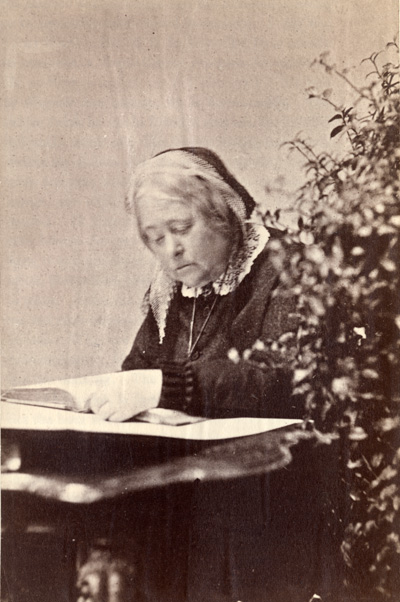
“The social principle” was Peabody’s Transcendentalism (a term she also put into writing in 1825, although The Christian Examiner refused to publish that essay in 1834).14 It is “the very principle of our nature,” Peabody wrote: “that principle which is capable of being God within us.” All of us possess, she believed, “a spring of emotion deeper than the emotions of beauty and sublimity.” This innate “sympathy” impels us toward reciprocal care-giving, making our “social relations . . . a miniature of the spiritual universe.”15 No wonder Peabody’s most significant contributions to The Dial as a writer were essays on Brook Farm and Fourierism; it was George Ripley who introduced the social principle into Transcendental Club discussion six months before he moved with his wife, Sophia Ripley, a member of Fuller’s Conversations class, to Brook Farm.
In 1835, the year Elizabeth Peabody published her transcriptions and commentary on Bronson Alcott’s Temple School dialogues, Record of a School, the first book-length exposition of Transcendentalist views, Elizabeth told her sister Mary, recently returned from sixteen months in Cuba as a governess, that she was “the only practical transcendentalist there is.” Mary wasn’t “quite clear about the transcendental yet,” she wrote to Horace Mann, reporting the conversation, and Elizabeth’s claim to practicality didn’t help much.16 But I suspect Elizabeth was referring to the social principle. “The recognition of our personal identity,” she’d written in her essay—the “self-reverence” we acquire once we understand ourselves to be creatures of a loving God and members of an interdependent social circle—enables “our power of choosing”: what to think, how to behave toward others, how to act.17
Peabody’s good works went beyond the West Street bookshop and stretched late into the century with the founding of kindergartens nationwide and her campaign alongside the Piute leader Sarah Winnemucca to establish a tribal school rather than consign Piute children to the U.S. government’s brutal and deracinating boarding schools. Margaret Fuller left Boston to become a pioneer of advocacy journalism in New York City, to join a revolution in Rome. Theirs was a practical—practicing—Transcendentalism from which we can take inspiration. Peabody and Fuller remind us to exercise “our power of choosing.”
*
What are we to do? How shall we do it? Each of us will have our own answers. The title of my friend’s trio, Insomnia Flowers, sums up his composition practice: musical themes come to him in the night and keep him awake until he can jot them down. In the morning, in revision, they flower. May the worries that disturb our sleep tonight take shape in action tomorrow.
In Salem, I dry my tears and contemplate the headstones of Eliza Peabody and the three children whose deaths she’d mourned. Here, at Howard Street, she is among souls she brought into the world and served, amid what her son-in-law called society’s “practical necessities”—the cemetery and prison. Better this than to have been laid to rest beyond the exigencies of family and community life in the upper reaches of Harmony Grove. The “Utopia of human virtue and happiness” is too far off.
Or is it? The poet Rosanna Warren, whose father’s classic novel, All the King’s Men, warns against demagoguery, wrote to me recently of her determination “to act freely in a time of unfreedom.”18 Margaret Fuller envisioned her heavenly reward as “empowering me to incessant acts of vigorous beauty.”19 If action is heaven, we can make heaven here on earth. What could be more transcendent?
Megan Marshall is the author of the Pulitzer Prize-winning Margaret Fuller: A New American Life, Elizabeth Bishop: A Miracle for Breakfast, and The Peabody Sisters, a Pulitzer Prize finalist. Her most recent book is the essay collection After Lives: On Biography and the Mysteries of the Human Heart. She is the co-editor with Brigitte Bailey and Noelle A. Baker of Margaret Fuller: Collected Writings published by Library of America.
___________________________________________________________________________________________________________________________________________
1. Scott Wheeler, Insomnia Flowers, commissioned by the Boston Artists Ensemble. Premiere: Hamilton Hall, Salem, September 26, 2025; Lucia Lin, violin; Lishan Tan, harp; Jonathan Miller, cello.
2. Nathaniel Hawthorne, The Scarlet Letter and Other Writings (New York: W.W. Norton, 2017), 35.
3. Nathaniel Hawthorne letter to Sophia Hawthorne, December 2, 1844, The Love Letters of Nathaniel Hawthorne (Chicago: Society of the Dofobs, 1907), 113.
4. Elizabeth Palmer Peabody, “A Glimpse of Christ’s Idea of Society,” The Dial, vol. II, no. 2, October 1841, 222.
5. Elizabeth Palmer Peabody letter to William Wordsworth, March 27, 1829, Margaret Neussendorfer, ed., “Elizabeth Palmer Peabody to William Wordsworth: Eight Letters, 1825-1845,” Studies in the American Renaissance (Charlottesville: University Press of Virginia, 1984), 190.
6. David W. Blight and Deval Patrick in conversation with Imani Perry, “My Voice, My Pen, My Vote,” WIT25: Words, Ideas, and Thinkers Festival program, sponsored by the Authors Guild Foundation, September 28, 2025.
7. Ralph Waldo Emerson, “Natural History of Intellect,” in The Complete Works of Ralph Waldo Emerson, vol. 12 (Boston, Mass.: Houghton, Mifflin, and Co., 1904), 10.
8. Margaret Fuller letter to [Sophia Ripley?], August 27, 1839, Robert N. Hudspeth, ed., The Letters of Margaret Fuller, vol. 2 (Ithaca, NY: Cornell University Press, 1983), 87.
9. Elizabeth Palmer Peabody letter to George Francis Peabody, Monday, August [6, 1838], Straker typescripts, Antiochiana Collection, Antioch College, 1297-98.
10. Elizabeth Palmer Peabody, unpublished essay, “The measure of our Life is our Power,” Straker typescripts, Antiochiana Collection, Antioch College, 1293.
11. Elizabeth Palmer Peabody, journal entry beginning Friday, [August 10, 1838], transcribed in Mary Van Wyck Church manuscript biography of Elizabeth Palmer Peabody, Massachusetts Historical Society, 388.
12. Elizabeth Palmer Peabody, “Claims of the Beautiful Arts,” Democratic Review, November 1838, 253-68.
13. [Elizabeth Palmer Peabody], “Spirit of the Hebrew Scriptures.–No. 1. The Creation,” Christian Examiner, vol. 62, n.s. 32 (May 1834), 188.
14. See Megan Marshall, “Elizabeth Palmer Peabody: The First Transcendentalist?” Massachusetts Historical Review, vol. 8, 2006, 1-15.
15. Elizabeth Palmer Peabody, “The Creation,” quoted in Marshall, “EPP: The First Transcendentalist?” 4-5.
16. Mary Tyler Peabody letter to Horace Mann, May 30, 1835, Horace Mann Papers, Box 4, Massachusetts Historical Society.
17. Elizabeth Palmer Peabody, “The Creation,” quoted in Marshall, “EPP: The First Transcendentalist?” 4-5.
18. Rosanna Warren email to the author, September 30, 2025
19. Margaret Fuller letter to William H. Channing [?], December 3, 1840, Robert N. Hudspeth, ed., The Letters of Margaret Fuller, vol. 2 (Ithaca, NY: Cornell University Press, 1983), 187.