


From Iron Curtain to Inner Vision: Psychedelics, Spiritual Awakening, and Political Imagination in Ukrainian Art after the Fall of Communism
From Iron Curtain to Inner Vision: Psychedelics, Spiritual Awakening, and Political Imagination in Ukrainian Art after the Fall of Communism
Alisa Lozhkina, PhD Candidate, Central European University (Vienna, Austria)

From Iron Curtain to Inner Vision: Psychedelics, Spiritual Awakening, and Political Imagination in Ukrainian Art after the Fall of Communism
Abstract: This paper examines the impact of psychedelics on the spiritual and artistic revival in Ukraine following the fall of communism. In the 1990s, artists of the Ukrainian New Wave actively explored the entheogenic potential of substances that were relatively new to post-Soviet society. This surge in psychedelic art and spirituality is especially striking in a country emerging from seven decades of militant atheism. Substances such as PCP, LSD, mescaline, and psilocybin gained popularity during the 1990s, but the primary drug of choice for the Ukrainian artistic community was intramuscularly administered ketamine. The intense hallucinations and altered states of consciousness induced by ketamine were often conceptualized in quasi-religious terms, framed as journeys “to see God” and reflected in several seminal artworks.
This psychedelic revival coincided with the rise of postmodernism, which emphasized transgression as an essential artistic and heuristic tool. Ukrainian contemporary art of this era was characterized by an anti-aesthetic stance and the pursuit of provocative, unique experiences. This interest in breaking norms and conventions was natural in a society where dominant narratives were fundamentally shifting. New capitalist values were replacing old communist ideals, yet the young artists were not too inspired by this process. The negative legacy of the recent past loomed, as politics were closely associated with the empty images and overinflated narratives of Soviet propaganda. A mistrust of society translated into a search for new territories untainted by state ideology.
The psychedelic spirituality of Ukraine’s 1990s generation can thus be seen as a retreat into the self, but this agenda wasn’t escapist. Altered states of consciousness offered a unique optics for exploring the new political and social realities that Ukraine was beginning to navigate.
Guys, I’m seeing God!
Take it easy, dude, we’re all seeing him...
This anecdote is about the first intramuscular ketamine experience of a psychedelic-naive Odessa gangster tripping alongside his more seasoned companions in the 1990s. It was often retold by artists of Ukraine’s New Wave.1 Seeing God” became the unofficial jargon within the Ukrainian art community to describe the psychedelic explorations of the first post-Soviet generation.
The 1990s marked the peak of psychedelic interest within the Ukrainian artistic community. Amidst societal changes and new challenges, the psychedelic revolution of this period was eventually followed by two major real-life revolutions in the country. Over time, the epoch of introspection and inner exploration gradually declined, giving way to an era of direct political activism. Nevertheless, the 1990s remain a pivotal moment, marking the period when Ukrainian artists deeply engaged with altered states of consciousness—a concept Wouter Hanegraaff identifies as central to understanding esoteric gnosis.2 “Hanegraaff sees gnosis as a kind of direct encounter with hidden layers of reality, something people often reach through altered states. Seen this way, the New Wave’s psychedelic experiments weren’t just diversions. They were a modern form of gnostic seeking, a means of touching knowledge that lay beyond ordinary perception.
The fact that the artists of the New Wave not only experimented with psychedelics but also produced a significant body of work addressing these experiences highlights how crucial these explorations were to their creative development. However, this topic has been largely overlooked by Ukrainian art historians. Discussions about altered states of consciousness remain taboo, especially those induced by mind-altering substances that may be illegal and are often perceived as risky. Strong societal prejudices against drugs, coupled with the lack of an established scholarly tradition for addressing such controversial subjects, have further marginalized this discourse. Most artists themselves do not publicly discuss their psychedelic experiences to avoid alienating clients and gallerists. Despite these challenges, the discovery of psychedelics played a transformative role in shaping new artistic and spiritual landscapes in Ukraine following the collapse of the Soviet Union. This paper contends that psychedelics profoundly shaped the artistic and spiritual experiments of Ukraine’s New Wave, yet their role has been largely erased from art-historical discourse. 3
Psychedelic Fall of the Soviet Union
During the fall of the USSR, processes of cultural change that unfolded gradually in other societies seemed to happen all at once. For example, the shock of the collapse of familiar values and the cultural disorientation caused by the sudden influx of Western popular culture occurred rapidly in post-Soviet countries. In the early 1990s, cheap soap operas from Mexico, Brazil, and the US—with their capitalist Cinderella fairy tales—were watched by nearly the entire population. Simultaneously, the reading public dove into philosophy and literature that had previously been forbidden. Sigmund Freud and Carlos Castaneda, Timothy Leary and Henry Miller, French structuralists and post-structuralists, positivists and postmodernists, esoterica and palmistry, the Bible and the Bhagavad Gita—all these were devoured at a frantic pace, like a feast after a long famine. Soviet culture was logocentric, and young artists were used to reading a lot. With new texts suddenly available, they experienced an intellectual explosion that blurred the boundaries between philosophy, mysticism, and art.
At the same time, a booming market in pirated video cassettes emerged, offering Soviet citizens access to Hollywood classics, shockingly unfamiliar pornography, and European arthouse films. An alternative music scene began to flourish, and the first raves took place. At the same time, a wave of new substances swept through the bohemian circles, astonishing artists with their effects. Taken together, these elements formed a kaleidoscopic and utterly unique worldview.
The discovery of psychedelic substances in the USSR did not happen overnight. Stanislav Grof, in his book When the Impossible Happens, dedicated a whole chapter of his memoirs to bringing LSD to the Soviet Union in the 1960s. In 1964, Grof visited a group of scientists who worked at the Bekhterev Psychoneurological Institute in Leningrad, joined by colleagues from the Department of the Study of Interpersonal Relations at the Psychiatric Research Institute in Prague. “Going to the Soviet Union, we decided to take with us 300 ampoules of lsD-25, each containing 100 micrograms of the substance,” wrote Grof.4 Before the return to Czechoslovakia, Grof and his colleagues left LSD with the Russian scientists. There was little known about psychedelics in the Soviet Union beyond narrow scientific and KGB circles. Wider interest in these substances arose in the late 1980s when members of the cultural underground discovered LSD, PCP, mescaline, and other mind-altering drugs.
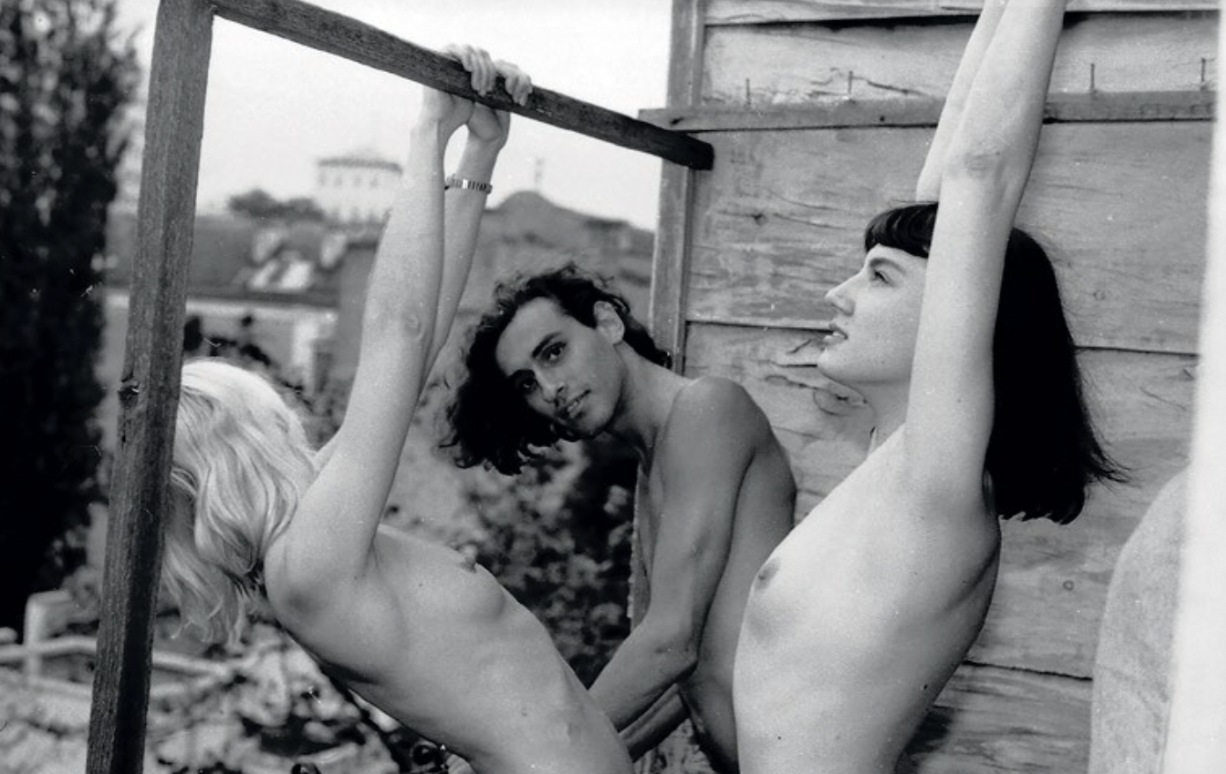
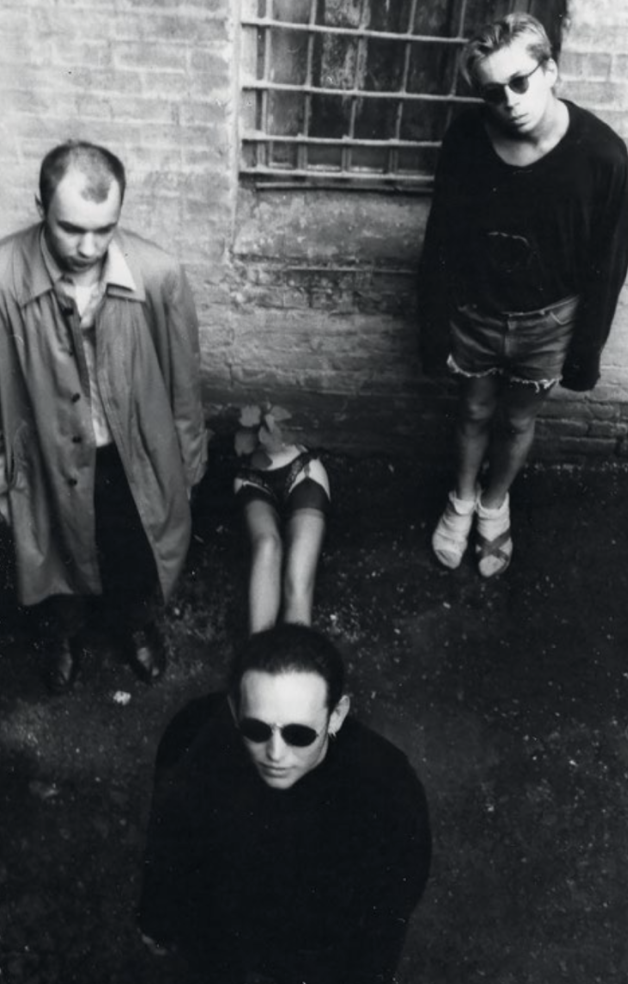
Alongside a late Soviet infatuation with New Age ideas,5 the rising use of psychedelics led to the formation of a distinct Ukrainian “psychedelic occulture,” which Christopher Partridge calls the heterogeneous blend of esoteric practices, alternative spiritualities, and popular culture that rework religious ideas outside institutional frameworks.6
Ukrainian New Wave Gets Altered
The decline of the superpower sparked a wave of artistic and spiritual exploration. In Ukraine, the so-called New Wave of artists emerged during and after the Soviet Union’s collapse. This generation broke away from the official aesthetic paradigms. The artists rejected the propagandist agenda of Socialist Realism. Instead, they aligned themselves with the international cultural scene, particularly drawing inspiration from the Italian Transavanguardia movement. In the early 1990s, after Ukraine gained independence, this cohort began exploring new artistic media while living in bohemian squats, organizing the country’s first rave parties, and experimenting with mind-altering substances. The contrast between this lifestyle and the conservative norms of Soviet society was staggering.
The Ukrainian New Wave’s fascination with psychedelic drugs was part of a wider artistic impulse to explore extreme states of consciousness—a drive that has marked creative circles throughout history. It was a rebellion by an entire generation against outdated social conventions, a search for new meanings amidst the timelessness, freedom, and ideological vacuum that emerged from the ruins of the communist world. The surge in psychedelic art and spirituality is especially striking in a country transitioning from seven decades of militant atheism and materialism.
In Kyiv, the epicenter of this artistic movement was a squat7 oon Paris Commune Street. From 1990 to 1994, the squat, commonly known as Parkom, became a hub for a community of young artists who lived and made their art there. It emerged as a central site of bohemian life in Ukraine. This environment fostered a vibrant, creative space where the boundaries of traditional artistic expression were continuously pushed. Artists Oleksandr Hnylyzkyj and Oleh Holosii were among the key residents of Parkom. They helped define it as a community hub for artistic and psychedelic experimentation.
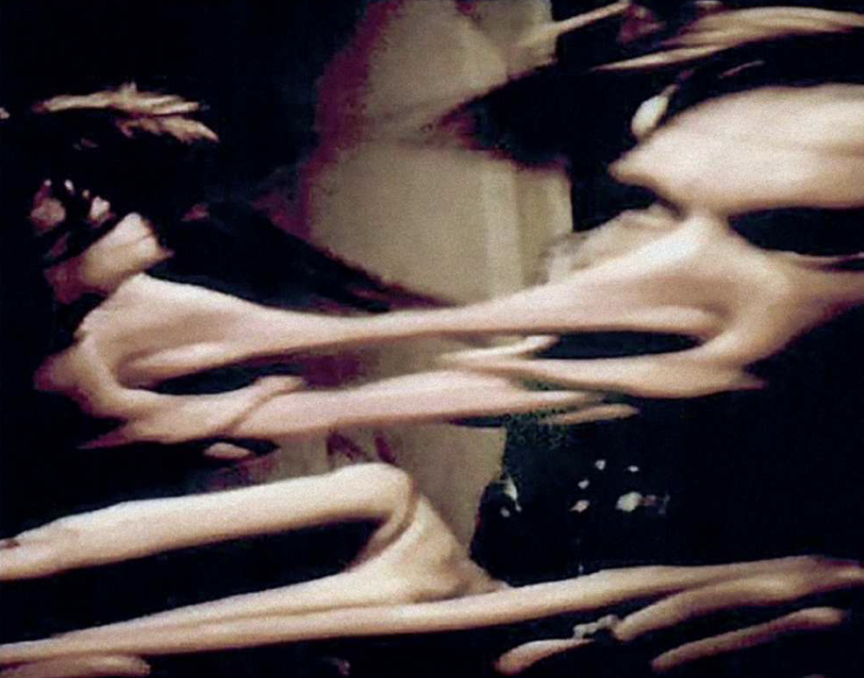
For the artists of the New Wave, video was a fascinating new means of expression. The first video experiment in the new Ukrainian art—Curved Mirrors—was inspired by mind-altering substances.8 Curved Mirrors (1992) was produced by Oleksandr Hnylyzkyj, a Parkom resident and a key figure of Ukrainian New Wave. Hnylyzkyj bought curved mirrors from the fun house of an abandoned entertainment park. Once he had installed the mirrors in his studio, he invited two other artists, Natalia Filonenko and Maksym Mamsikov, to play the leading roles in his film. According to recollections by Oleksandr Soloviov, one of the leading curators of that era, the participants were under the influence of psychoactive substances.9 The video essentially documented an episode of group sex, but the distortions produced by the curved mirrors transformed it into a hallucinatory scene. Hnylyzkyj managed to create a truly unique surrealist effect by filming erotic and pornographic scenes reflected in the curved mirrors. It was as if the spirit of Salvador Dali had been reawakened, flavored with some of the hedonism, psychedelia, and creative experimentation that the Ukrainian New Wave had come to be known for. As a result, the video lost its pornographic qualities and visually resembled drug-induced optical distortions. The film’s aesthetics clearly mimicked a psychedelic trip, but in a playful, subtle way legible only to the “initiated.” The time for openly referencing psychedelics was yet to come.
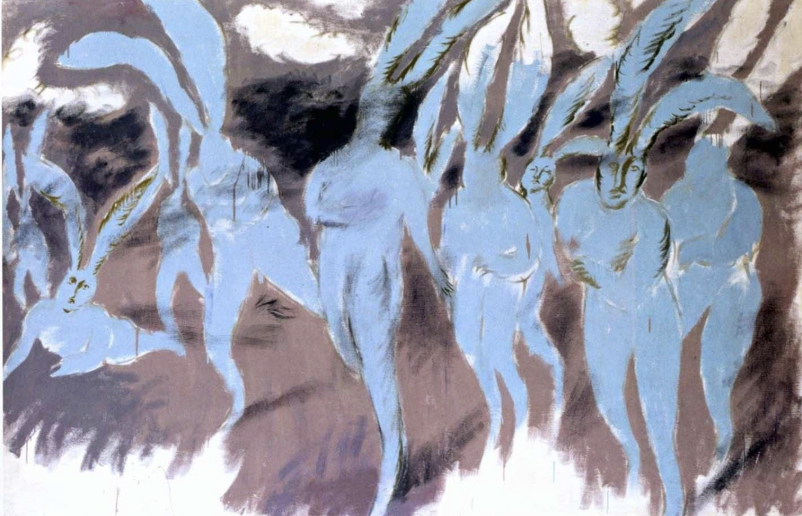
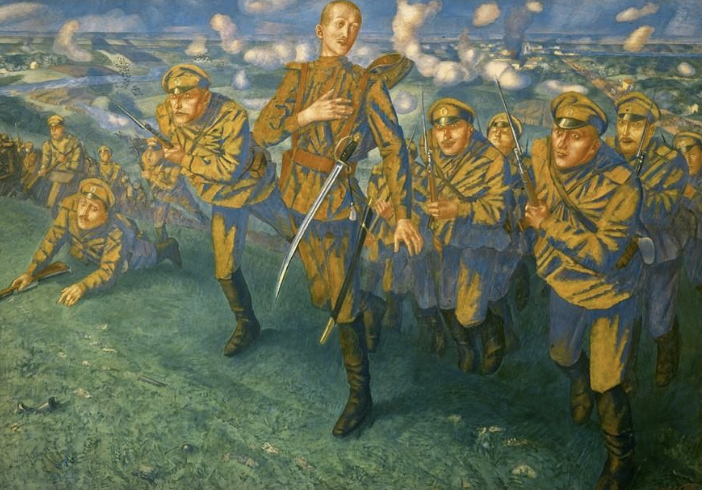
Another central figure of the Parkom squat was Oleh Holosii. Over just two years in the early 1990s, he created an impressive number of paintings addressing psychedelic themes. Oleh Holosii’s most famous artwork is his painting Psychedelic Attack of the Blue Rabbits (1990). Following the postmodern practice of citation, the artist copied the famous composition by the Russian artist Kuzma Petrov-Vodkin, In the Line of Fire (1916). In this classic painting, the heroes of World War I are replaced by absurdist rabbits with human faces. Psychedelic Attack of the Blue Rabbits may be read as a manifesto of its generation: Instead of confronting external enemies, its protagonists push through the artificiality of post-Soviet reality toward the inner frontiers of expanded consciousness. In Petrov-Vodkin’s painting, World War I soldiers surge forward in attack: one charges with a weapon, while the central figure—an officer who had just led the advance—lies mortally wounded, struck in the heart. Holosii replaced these soldiers with grotesque rabbits bearing human faces, turning the heroic charge into a surreal, psychedelic assault. The work can be read as a generational manifesto. Rather than fighting external enemies, its protagonists confront the artificiality of post-Soviet reality and push toward inner frontiers of consciousness. Yet the painting also acquired a tragic, prophetic quality. Just as Petrov-Vodkin’s bravest attacker is also the first to perish, Holosii himself—one of the most daring figures of his generation—died young while under the influence of psychedelic substances.
Twenty-seven-year-old Oleh Holosii died on January 17, 1993, in an accident during a psychedelic walk around the city. Under the influence of PCP, he fell to his death after trying to take flight from a building site in the botanical gardens. Oleh Holosii’s death was deeply traumatic for the whole New Wave generation. The euphoria of Parkom faded away, leaving behind what Jean Baudrillard—a French sociologist popular in Kyiv— called “the world after the orgy.”
Psychedelic Turn in Odesa
As the enthusiasm surrounding psychedelics waned in Kyiv, the psychedelic revolution was still in full swing in another major Ukrainian city—Odesa. Here, the spotlight was on ketamine, the post-Soviet art community’s favorite substance.10 During Soviet times, drug use was largely confined to the criminal subculture and was primarily associated with heavy opiates. In the art world, alcoholism was a much more widespread problem. Ketamine entered the art community through the medical field as part of a broader effort to combat chronic alcoholism. In the 1970s, morphine was used in the USSR for this purpose, which tragically led to widespread opioid addiction among artists and intellectuals; one of its most famous victims was the musician and poet Vladimir Vysotsky. Aware of morphine’s extreme addictiveness, doctors began searching for alternative methods to treat alcohol dependence. Between 1984 and 85, ketamine was proposed as such an alternative by Evgeny Krupitsky, a psychiatrist and addiction specialist from Leningrad (modern-day St. Petersburg).11 Later, Krupitsky also began using sub-anesthetic doses of ketamine to treat heroin addiction.12
News of ketamine and its remarkable properties quickly spread across the Soviet Union's numerous horizontal artistic networks. In Ukraine, the news about the substance and instructions for its recreational use was spread by Sergey Anufriev. A key figure in Odesa and Moscow’s conceptualism, Anufriev played a vital role in introducing new ideas and substances to Ukraine. As an artist, writer, and charismatic figure, he traveled widely across major Soviet cities, contributing seminal texts on art and psychedelia. Ketamine, together with PCP, was among the first profoundly mind-altering substances with which the Ukrainian art community engaged over an extended period. Unlike PCP, ketamine was shorter-acting, inexpensive, and widely available in pharmacies—especially in Odesa, where it could often be obtained without a prescription. While nasal use was not uncommon, the dominant practice involved intramuscular injection, following a protocol apparently adapted from medical clinics: darkened rooms, carefully chosen music, and an atmosphere of ritualized attention. At least in its initial stage, this was experienced as a sacral event. The altered states induced by intramuscular administration were so unusual that they reshaped participants’ sense of reality. Though powerful, these experiences were largely ineffable and influenced less the surface aesthetics of artistic production than the artists’ broader orientation toward reality itself. Soviet social conditioning and established artistic norms were suddenly and radically dissolved, giving rise to new, provocative modes of expression.
In the early 1990s, Odesa saw the formation of its own circle of New Wave artists, closely connected to Kyiv’s Parkom. The informal leader of this circle was Oleksandr Roytburd—an artist, curator, and a mentor to an entire generation of creative youth. During Soviet times, the profession of an artist had a rigid, nepotistic structure. Artists usually began training in specialized art schools and universities from early childhood. The profession was also somewhat hereditary, as the children of Soviet artists often had an unspoken advantage when applying to art schools. The 1990s brought significant change to Odesa’s artistic community. The vibrant, punk-like atmosphere and newfound freedom of this era completely redefined the rules of the game.
Oleksandr Roytburd invited people from outside the established art world to participate in his numerous unconventional and dazzling projects. As Olena Mykhailovska, one of the leading curators of 1990s Odesa contemporary art exhibitions, says, psychedelics were central to this revolution. Not only were they tools for perception-altering but also for social levelling, uniting individuals in shared experiences that cut across lines of education, class, and established cultural capital. Through the use of psychedelics, artists with no professional training were nonetheless able to tap into the altered states of imagination attuned to the experimental bent of the New Wave.
It’s no coincidence that within the art community of that time, the first intramuscular injection of ketamine was usually referred to as an “initiation.” By 1994–95, the collective use of psychedelics had grown to such proportions that nearly every afterparty following an exhibition opening transformed into a shared “flight.” In the slang of the artistic crowd, the verb “to fly” referred specifically to the experience of a ketamine trip induced by an intramuscular injection. The communal “flights” fostered a sense of membership and legitimacy in the art world, effectively lowering the entry threshold. Thus, psychedelics enabled a democratization of the art world, making it accessible to new players who would otherwise have been left out of its transgressive investigations.
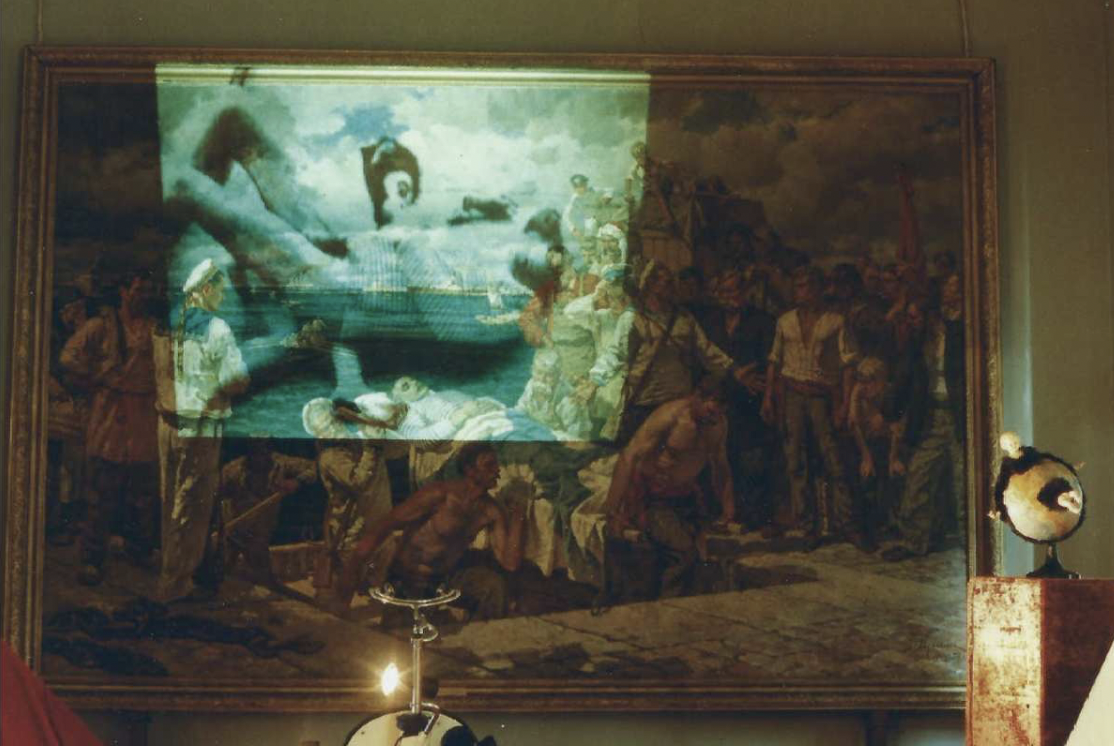
In 1998, Alexander Roytburd created his renowned video, Psychedelic Invasion of the Battleship Potemkin, into the Tautological Hallucinations of Sergei Eisenstein. This work became one of his most celebrated pieces and stands as a key statement on psychedelic aesthetics in contemporary Ukrainian art. Roytburd used snippets of Sergei Eisenstein’s film Battleship Potemkin, considered to be both a masterpiece of Soviet montage and one of the most powerful works of revolutionary propaganda. By re-editing fragments of this foundational film together with vignettes produced in collaboration with Odesa artists, Roytburd playfully distorted the film’s narrative and undermined its ideological solemnity. Choosing Battleship Potemkin was itself a pointed gesture. For decades, the film embodied the heroic myths of Soviet culture. In Roytburd’s hands, it became the raw material for a hallucinatory deconstruction of those myths. The video received international recognition almost immediately—it was purchased by MoMA in New York13 and then selected for the central section of the 2001 Venice Biennale, Plateau of Humankind, by legendary curator Harald Szeemann. It is not surprising that Szeemann took an interest in Roytburd’s psychedelically informed art. He had been among the first contemporary curators to engage seriously with psychedelic visionary aesthetics. Back in 1969, his landmark exhibition, When Attitudes Become Form, at Kunsthalle Bern was deeply influenced by the counterculture and became a seminal curatorial statement reflecting the psychedelic revolution of the 1960s.
Roytburd’s other video was titled Eros and Thanatos of the Victorious Proletariat in Dziga Vertov’s Psychomotor Paranoia (2001). Here, in the spirit of Dziga Vertov’s avant-garde Kino-Eye film technique, fragments of film from the broadest range of sources possible were organically woven together. Dziga Vertov's Kino-Eye proposed that the camera, through montage, could reveal out-of-the-daily-sight realities. Roytburd reengineered this process—splicing together images as disparate as autopsies and pornography—to move it from revolutionist idealism to psychedelic bewilderment and post-Soviet satire. These films created a specifically Roytburdian style, one marked by a blending of Vertov’s visual aesthetic—quick cuts, jarring juxtapositions, and shifting visual angles—into the strident color contrasts and perceptual dislocation of psychedelic culture, and with the disturbing authority of violent or transgressive images. The result was a language of sight that disrupted perception and subverted conventional forms of narrative.
Hallucinations of the Political
Ukrainian New Wave is often criticized for its lack of interest in politics. It is true that activism in Ukrainian art would only begin a decade later. If the New Wave artists engaged with political themes, it was most often done at an ironic distance. However, the artists’ apolitical stance and the psychedelic revolution the 1990s generation lived through could, to a certain degree, be interpreted as a political position. The negative legacy of the recent past was clearly at play here, where everything political was associated with the overinflation of narratives and the empty images of the propaganda machine in the late Soviet period. The fundamental characteristics of this generation were freedom, hedonism, and transgression.
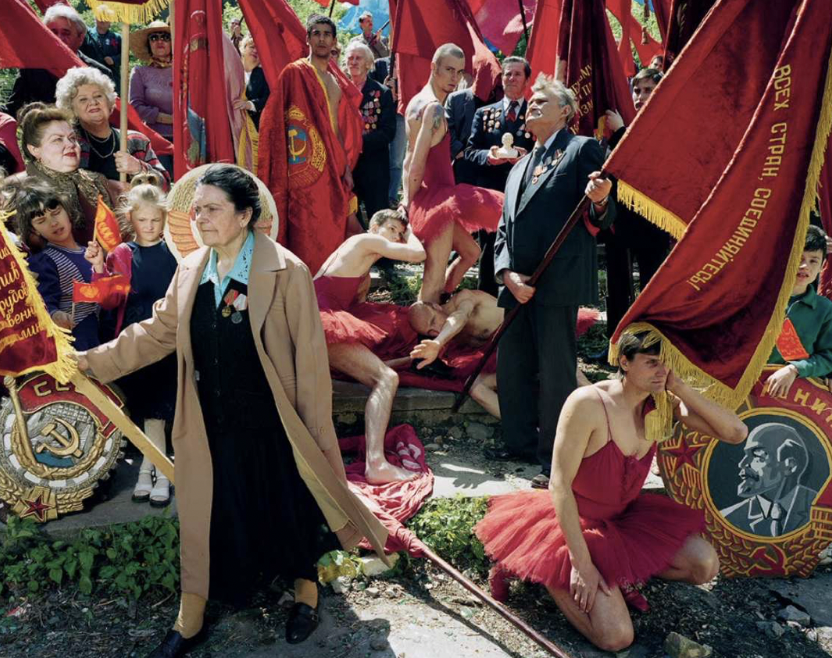
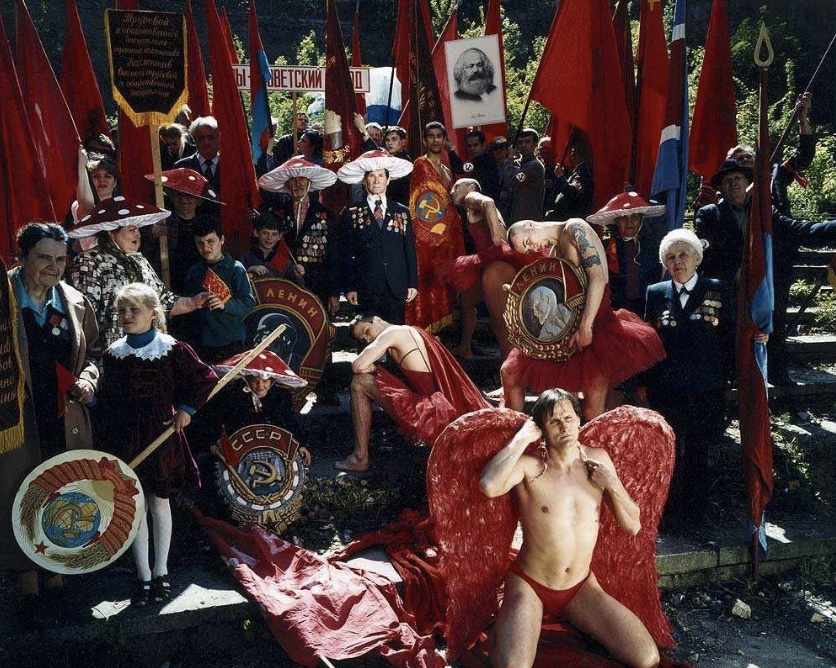
An important artwork from the later period that explores psychedelic aesthetics and the political imagination of the post-Soviet era comes from another key artist of the New Wave, Kyiv-based painter and photographer Arsen Savadov. His photo series Collective Red—II (1999) originated as a performance-intervention during a communist May Day demonstration in Kyiv’s European Square. A group of young, handsome male performers, dressed in ballet tutus, struck bizarre poses in front of the demonstration, transforming it into a backdrop for their personal homoerotic spectacle.
Collective Red—II focused on the precarious nature of reality as Ukraine stood on the border between different epochs. By the late 1990s, Ukraine’s Communist Party had become a caricature of its former self, a collection of armchair warriors and empty simulacra. Collective Red—II reflects how young decadents, like Savadov, experienced the collapsed totalitarian system as little more than a pile of empty symbols. The performance is saturated with red; the once powerful signifier of the Red Terror and the twentieth century’s most resilient utopia is reappropriated for a new age. The second part of the series is defined by its intentionally overloaded composition. The mass of bodies, slogans, and flags invokes the absurd theater of late Soviet totalitarianism, as well as the traditions of socialist realist art. The youths in ballet tutus demoralize and undermine those former everyday citizens of the USSR. Orgiastic psychedelia parades itself in front of totalitarian seriousness. Old WWII veterans are posing wearing toadstool hats, and it soon becomes clear that everybody in the frame, including the performers, is no more than just a part of an endless, bloody-red hallucination.
Transgression is key to understanding the art world post-perestroika, as it became a natural reaction to the changes happening in a society where the dominant narratives were fundamentally changing. New capitalist values replaced old communist ideals, but the young artists were not particularly interested in or inspired by this process. A mistrust of society was transmuted into a search for new territory that was free from state ideology. These artists left “normal” behind to explore the territories of the impossible. Overcoming social taboos and moral boundaries amidst over-consumption and excess, uncovering one’s sexuality and the “death of God” on the ruins of the communist utopia, all became a kind of fetish. Bataille’s “absolute negativity,” which is experienced during ecstasy, frenzy, orgasm, and death, was taken literally by the artists of the New Wave and practiced without compromise.
As cultural sociologist Pascal Gielen notes, imagination enables forms of “exodus” from society, or what famous Italian artist Michelangelo Pistoletto calls inodus: the ability to remain physically present in the world while mentally distancing oneself from it.14 The psychedelic experiences of the 1990s generation can be characterized precisely as inodus, a retreat into the self, into an imaginary space, or even further, into a space of altered consciousness.
Timothy Leary, a theoretician of psychedelic rebirth, compared the experience of hippies in the 1960s and their radical process of inodus under the influence of LSD to the discovery of new continents by the great explorers of old.15 It is both a glorious and dangerous endeavour to disembark upon the unexplored territory of one’s consciousness. Just like any underprepared psychonaut, the artists of the New Wave took substantial risks in their experiments, navigating the delicate space between “absolute negativity” and their attempts to “see God.”
Alisa Lozhkina
Alisa Lozhkina is an art historian, curator, and a PhD candidate in Comparative History at Central European University. Her current research is focused on the role of psychedelics in Ukrainian art community after the collapse of the USSR. Lozhkina was the editor in chief of Art_Ukraine magazine and served as a deputy director and chief curator of Mystetskyi Arsenal, Kyiv. Lozhkina has curated exhibitions in Ukrainian and international museums and authored several books. In 2024 her book Art in Ukraine was published by Thames & Hudson as a part of iconic World of Art series. She is also an artist.

Footnotes
- Ukrainian New Wave is an artistic movement that took shape in the late 1980s and early 1990s, during the era of perestroika, the collapse of the Soviet Union, and the emergence of independent Ukraine. The artists of this generation were rejecting the constraints of Soviet official aesthetics in favor of experimentation with new forms, themes, and modes of expression. [Return to Section]
- Wouter J. Hanegraaff, Western Esotericism: A Guide for the Perplexed (London: Bloomsbury Academic, 2013), 97–101. [Return to Section]
- This neglect mirrors what Wouter Hanegraaff identifies in the Humanities broadly, where psychedelics have been overlooked and written out of historical account, due to academic skepticism about the study of these substances. Wouter J. Hanegraaff, “Entheogenic Esotericism,” in Contemporary Esotericism, ed. Egil Asprem and Kennet Granholm (Durham: Acumen Publishing, 2012), 392–409. [Return to Section]
- Stanislav Grof, When the Impossible Happens: Adventures in Non-Ordinary Realities, 1st ed. (Boulder, CO: Sounds True, 2006), 332. [Return to Section]
- This topic is best described in Michael Hagemeister and Birgit Menzel, The New Age of Russia: Occult and Esoteric Dimensions, ed. Bernice Glatzer Rosenthal, illustrated ed. (New York: Peter Lang GmbH, Internationaler Verlag der Wissenschaften, 2012). [Return to Section]
- Christopher Partridge, High Culture: Drugs, Mysticism, and the Pursuit of Transcendence in the Modern World (Oxford: Oxford University Press, 2018), 4. [Return to Section]
- Art squat is a building, usually abandoned or underused, that is occupied by a collective of artists to create studio and exhibition space. [Return to Section]
- There was no concept of video art in the Western sense in the Soviet Union. Very few individuals owned video cameras, and the official art system did not recognize video as a medium for private artistic expression. Moving images belonged primarily to the realm of propaganda. That said, there were a few exceptions at the margins: some experimental filmmakers played with moving-image techniques, but these were not recognized as “video art” and were rarely shown publicly. [Return to Section]
- Interview with Oleksandr Soloviov, conducted by Alisa Lozhkina via Zoom as part of dissertation research, January 16, 2024. [Return to Section]
- Ketamine was not criminalized in Ukraine at that time. Ampoules for intramuscular use were widely available in pharmacies. [Return to Section]
- E. M. Krupitsky et al., “Metabolism of Biogenic Amines Induced by Alcoholism Narcopsychotherapy with Ketamine Administration,” Biogenic Amines 7 (1990): 577–82. [Return to Section]
- Evgeny Krupitsky et al., “Ketamine Psychotherapy for Heroin Addiction: Immediate Effects and Two-Year Follow-Up,” Journal of Substance Abuse Treatment 23, no. 4 (December 2002): 273–83. [Return to Section]
- https://www.moma.org/collection/works/120284?artist_id=35448&page=1&sov_referrer=artist [Return to Section]
- Pascal Gielen, The Murmuring of the Artistic Multitude: Global Art, Politics, and Post-Fordism (Amsterdam: Valiz, 2015). [Return to Section]
- Timothy Leary, “From LSD to Virtual Reality,” talk at Sonoma State University, 1992, https://archive.org/details/learydvd_3, accessed February 8, 2025. [Return to Section]
Suggested Citation
Lozhkina, Alisa. “From Iron Curtain to Inner Vision: Psychedelics, Spiritual Awakening, and Political Imagination in Ukrainian Art after the Fall of Communism.” In Psychedelic Intersections: 2025 Conference Anthology, edited by Jeffrey Breau and Paul Gillis-Smith. Center for the Study of World Religions, Harvard Divinity School, 2026. © License: CC BY-NC. https://doi.org/10.70423/0004.09