


The Childless Ascetic
Edited by Aaron Michael Ullrey
The following Research Reflection is part of an ongoing series spotlighting the academic study of religions.
When I was seven years old, through songs and poems, my teacher, a widow, instilled in me an awareness of the inevitability of mortality. Her words left a lasting impression that crystallized into my realization at the age of twelve that “time” is merely the interval between birth and death. I decided to never have children.
Birth is inseparable from death, its necessary counterpart; indeed, birth is the primary cause of death. This intuition has never left me, and it probably unconsciously influenced both my university studies and my later decision to research the lives and philosophies of celibate Hindu ascetics, often called sādhus. I present my ethnographic and historical research in an upcoming entry to the Archive of Mystical Experience.

The sādhus’ commitment to non-procreation, I suggest, is not merely a lifestyle choice but an ethical and existential position. To refrain from generating life may mean refraining from perpetuating saṃsāra, the cycle of worldly existence dominated by life and death. Generally, for Hindus, to be childless is traditionally understood as a lack, a failure to complete one’s life purpose. Producing children is part of one’s dharma—not just a private choice but a responsibility to ancestors, kin, and the wider social order—and children are necessary to repay the debts with which each human is born.
Sādhus renounce traditional Brahmanical norms and society in order to pursue liberation (mokṣa). Their path is structured through maintaining celibacy (brahmacarya) and sādhanā, a disciplined practice cultivating detachment from the senses and sexual impulses. The celibate sādhu challenges the religious and social valorization of reproduction.
This anti-procreation logic appears in the cosmological framework of one of the earliest Upaniṣads, the Bṛhadāraṇyaka (c. ninth-sixth century BCE), which offers a striking narrative that birth is just a way of feeding Death. In the beginning, there was only Death, who, being hungry, created “everything that is here” so that he might eat whatever he birthed. The whole world, therefore, is his food, perpetually created through procreation. But Death is evil, and one must strive to be free from Death.
In the context of this Upaniṣad scripture, the desire for offspring arises from loneliness and the need for continuity, hence the Upaniṣadic ascetic considers procreation a response to existential insecurity that only further entangles those who bear children with Death. Real completeness arises from detangling from Death and the world, considering the mind as the self (ātman), the speech as the wife, the breath as the offspring, and seeking insight into Brahman—the ultimate reality. If birth feeds Death, abstaining from reproduction interrupts Death’s economy. Following this perspective, non-procreation overcomes possible future deaths, and celibacy is not merely rejecting sexuality in favor of personal liberation but an ethical attempt to deactivate the cycle of saṃsāra.
Among sādhus, however, celibacy is not only related to non-reproduction but to the retention of the semen, which is believed to conserve and accumulate spiritual powers. This logic is reinforced in yogic practices centered on bindudhāraṇa: bindu meaning “semen” and dhāraṇa meaning “retention” or “concentration.” In haṭha yogic contexts, semen is a source of power and energy that leads to spiritual attainment and liberation. But expending semen and procreating depletes that power and energy.
During my fieldwork, an ascetic known as Jogi Baba, living in a jungle at the outskirts of Shantiniketan in West Bengal, articulated this view succinctly: “Sāṃsārik people find their place in their sexual union. But bindu patan maraṇ, bindu dhāraṇam jivam: if one drops semen [bindu patan], this leads to death, but if one does bindudhāraṇa, he gets jivam, that is life.”
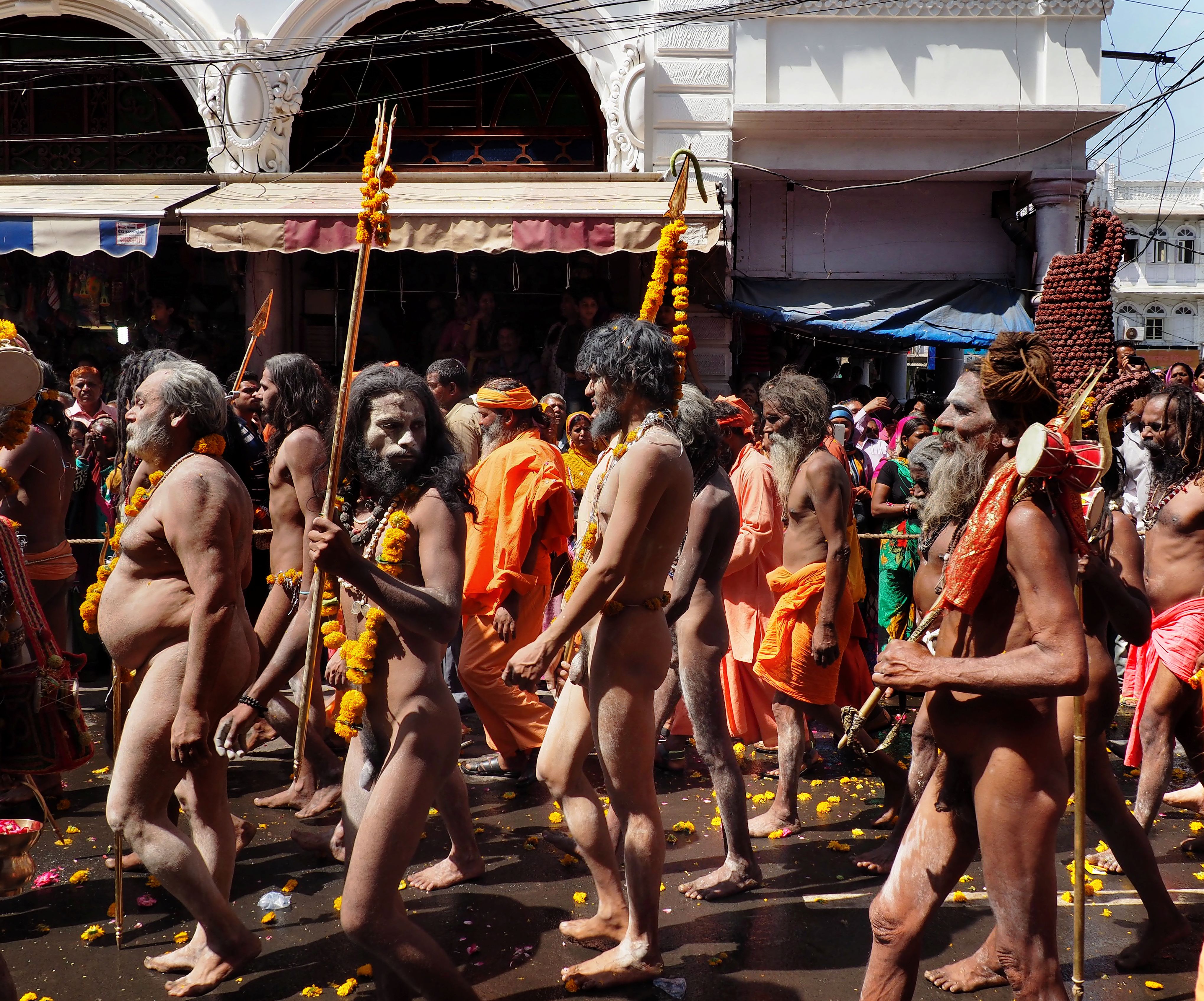
Jogi Baba’s perspective inverts conventional assumptions by asserting that life is generated by continence, which leads to “true” immortality. What is really important is the preservation of semen—this view justifies certain ascetic groups endorsing ritual couples whose sexual life is characterized by childlessness. However, since a life without progeny or family obligations allows an individual to focus entirely on spiritual disciplines, one could also argue that celibacy and non-procreation are, in reality, motivated by personal self-interest. Non-ascetic individuals like me who choose not to have children may similarly be accused of selfishness.
My intuition at the age of twelve that bringing life into the world meant bringing another being into death no longer appears to me as merely personal or emotional but ethical, a commitment to preventing a future person from suffering. I suggest that for sādhus, too, non-procreation and celibacy are practices that, while enabling them to preserve their spiritual power and pursue their individual religious goal, have ethical implications insofar as they prevent future beings from becoming food for Death. While such an interpretation requires further textual and ethnographic support, it offers a compelling lens to reconsider celibacy and non-procreation as a form of responsibility, not merely renunciation.