


The Mirror’s Other Side
Edited by Aaron Michael Ullrey
The following Research Reflection is part of an ongoing series spotlighting the academic study of religions.
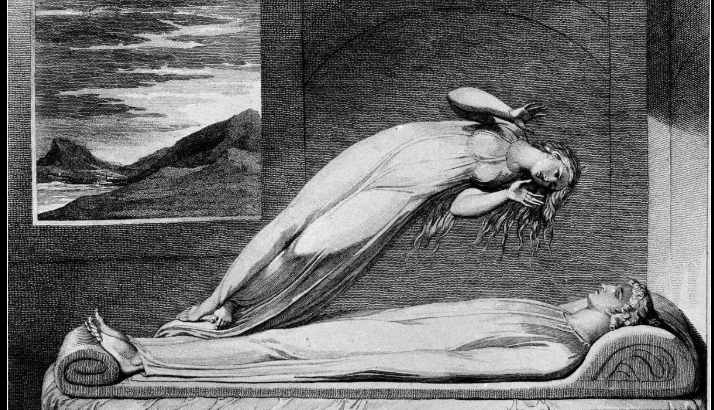
Reports of near-death experiences (NDEs) are not simply a late twentieth- and early twenty-first-century phenomenon appearing with the development of medical technology capable of resuscitating dead or near-dead patients. An NDE is an experience of an altered state of consciousness during physical trauma, often including an out-of-body experience, seeing a bright light, feelings of peace and bliss, a life review, and otherworldly visions, resulting in lasting positive change for the individuals and them losing their fear of death. NDEs were marveled at in the eighteenth century (and throughout the ancient and pre-modern world), and they have always had the remarkable ability to elude attempts at explanation.
Contrary to the cultural source hypothesis that, in NDEs, people see what they expect to see due to the conditioning of their respective cultures, upbringings, religions, and families, I argue that the way eighteenth-century writers and philosophers responded to NDEs illuminates Enlightenment-era cultural shifts yet resists any definitive explanation. They point to something powerful and mysterious. NDEs were and are stubborn, unruly, subversive, and transformative—for those who experience them and for cultures that receive and grapple with them.
In 1791, British Navy Captain Francis Beaufort, then a young midshipman, almost drowned, and then he experienced something extraordinary. He had been trying to shout for help and swallowed too much water; he eventually sank beneath the surface. Then he began to feel peace and a pleasurable calm, and to relive the moments of his life with startling, vivid accuracy.
“My whole life seemed to be placed before me in panoramic review,” he wrote, “and each act of it was companied by a consciousness of right and wrong, or by reflections on its causes and consequences.” In that moment of drowning, the world outside became a mirror reflecting Beaufort’s inner world and memories, imparting upon him a sense of moral weight.
Considered the father of the Enlightenment, the sixteenth-century philosopher Michel de Montaigne experienced an NDE without any explicit religious imagery. Montaigne lost his fear of death, began writing his famous Essais, and grew continuously more empathetic. The experience utterly changed him, leading him to question the religious disputes of his day and to criticize torture and exemplary violence, inspiring reprimands from the Church. The experience was a turning point for Montaigne, recognized even by scholars who hesitate to call it an NDE.
In 1782, George de Benneville, a French Huguenot who emigrated to Pennsylvania, related an NDE that included a vision of angels in heaven welcoming souls released from hell. Raised a Calvinist to believe that some souls were predestined for hell, his experience convinced him that, in actuality, all souls would be saved. An increased capacity for compassion and a sense of connection to others are well-documented changes in those who have had an NDE. Benneville went on to study medicine, write on the importance of compassion for all beings, and became known for treating immigrants, Native Americans, and even enemy troops in his clinic during the American Revolution. Though his Calvinist church ousted him, he remained committed to universal salvation, and he became one of the founders of the Universalist Church.
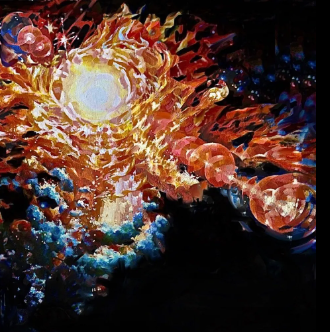
The eighteenth century culminated in the violent revolutions that ended monarchical regimes and old ways of life. The Freemasons, a secret society popular in this period, espoused ideals of democracy and equality and performed a ritual in which initiates were placed in a coffin and then rose from it as a symbol of death and rebirth. Death and resurrection are ancient tropes, but talk of death and transformation in a time of approaching revolution has explosive potential. It is no wonder that reports of NDEs in this period reflect a feeling that death is nothing to be feared and leads rather to a welcome change.
NDE reports are not merely mirrors that reflect a culture’s preoccupations and movements. They disrupt attempts to package them neatly. Religiosity does not predict NDEs or their unexpected effects. Beaufort, Montaigne, and de Benneville had surprising experiences, given their different backgrounds, leading to lasting transformations that could include adopting subversive philosophies.
NDEs are less like mirrors than like the windows of a house at night. When the lights are on, we only see our reflection. We might believe there is nothing beyond those windows; we might mistake them for mirrors. But if we dim the lights, we can begin to see through the windows to some other side, and there—even if imperfect and murky—we perhaps glimpse something true.