


"Phantom Tree" Exhibition and Opening Reception Photos
Postdoctoral fellow Elitza Koeva presented her artwork at "Phantom Tree," an exhibition at 92 Seattle Street in Allston, MA as part of the Thinking with Plants and Fungi Conference. The exhibition and the conference explored how plants and fungi help us rethink the nature of mind and matter and humans’ relationship to the more-than-human world.
Phantom Tree was supported by the CSWR’s Thinking with Plants and Fungi Initiative, Harvard’s Critical Media Practice program, Harvard Mellon Urban Initiative, ArtLab, Constellation Project, Shelemay Sound Lab, and the Department of Art, Film, and Visual Studies.
At the heart of "Phantom Tree" is a 150-year-old red oak tree that was felled in 2019 to make way for a multi-million-dollar renovation and extension of Andover Hall (now Swartz Hall) at Harvard Divinity School. The tree stood at the center of Divinity School, towering to a height of 75 feet, and covered half of the yard with its canopy. The work is rooted in archival research, as well as a series of conversations and interviews, often in the form of intimate confessions with activists who put efforts into attempting to save the tree. The story is one among many that highlight Harvard’s involvement in property development, urban gentrification, and land acquisition.
Phantom Tree acts as a point of departure, tracing the tree’s afterlife through diverse sensory experiences, aiming to decenter the privileged ontological position of the human and foreground the tree as a perfect embodiment of mutual entanglement and interdependence with the rest of the biotic and abiotic world.


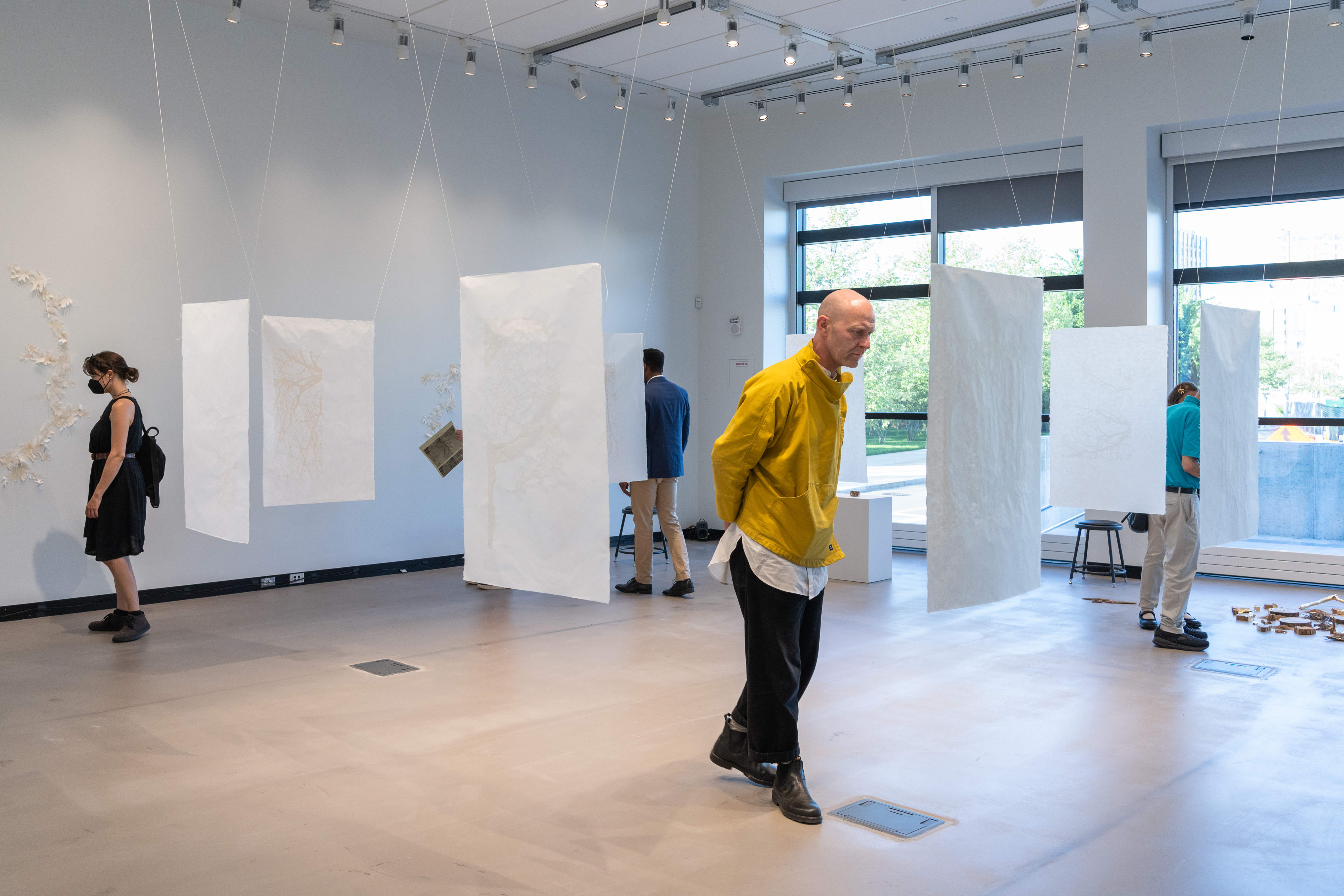
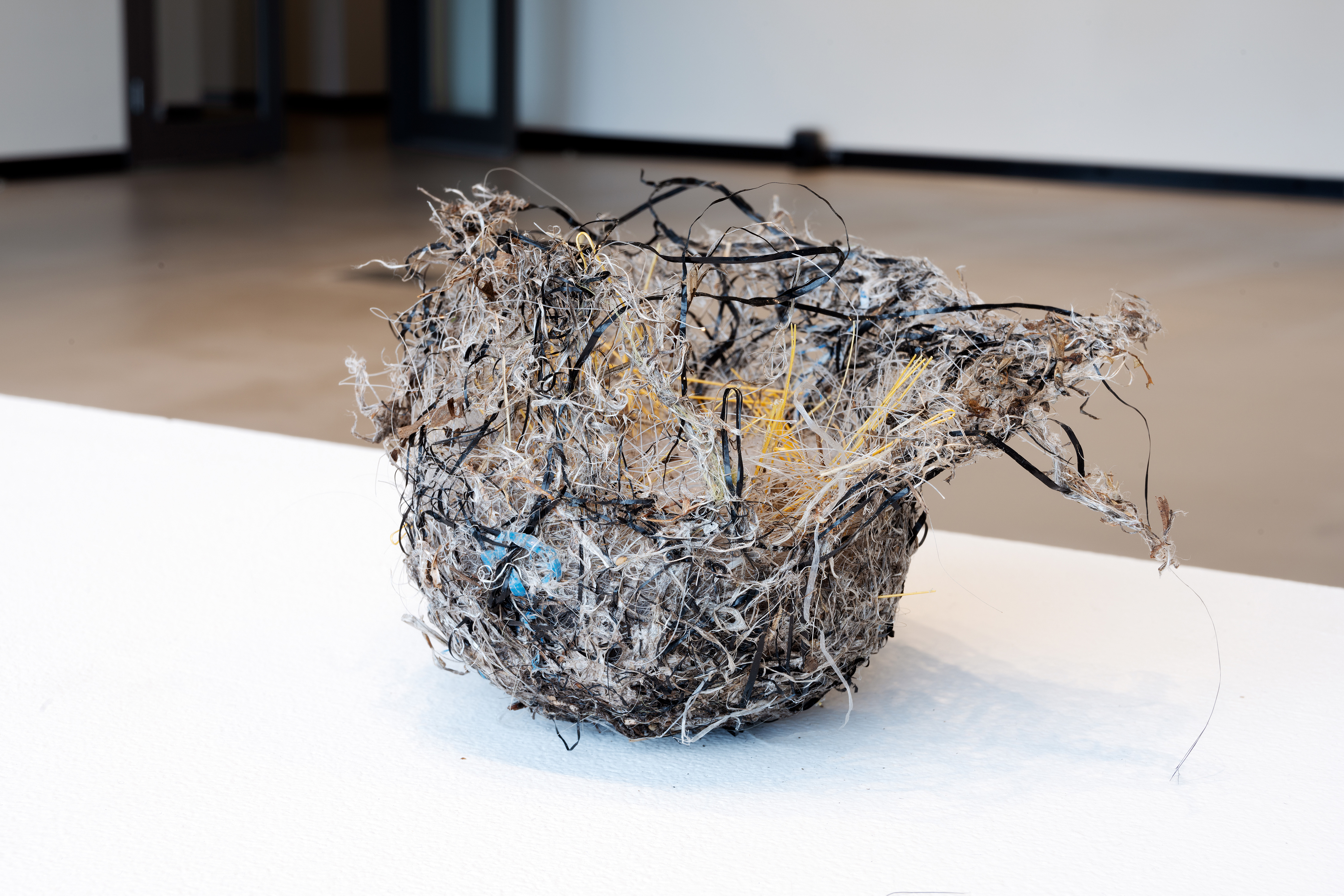
Photos by Yulia Spiridonova

Elitza Koeva's art practice explores temporality and the impermanence of tangible and intangible nature as well as emerging interferences and resonances among sound, space, biotic and abiotic entities in urban contexts. Her work aims to understand how artistic visual, sonic, and spatial practices engender engagement, critical awareness, and participatory responses to digitally mediated environments, reconciling the self and the social at the level of city construction and subjectivity.
Elitza is a postdoctoral fellow with the Thinking With Plants and Fungi Initiative at the Center for the Study of World Religions, Harvard Divinity School. She holds a master’s degree in media studies from the University of Tokyo and a doctoral degree from Harvard Graduate School of Design with a secondary field in Critical Media Practice (CMP). Her research examines the relationship among sound, place, and “cross-species sociality” (Haraway) to conceptualize space, intersubjectivity, and the sensorium within the framework of the human-animal-machine cybernetic triangle.