Muralism and Mexican Identity: Rediscovering the Esoteric Visions of Post-Revolution Female Artists: Q&A with Mariano Villalba
Following the decade-long Mexican Revolution, which profoundly reshaped the nation’s identity, muralism emerged as both an educational and ideological tool. Public spaces were transformed into visual narratives aimed at forging a shared national identity rooted in both Indigenous heritage and modern ideals. While many murals celebrated heroic male figures and revolutionary ideals, a few women artists developed a more intimate and introspective approach to spirituality. Their works explore esoteric themes through personal, spiritual, and psychological lenses, often departing from the monumental and nationalist aesthetics of their contemporaries.
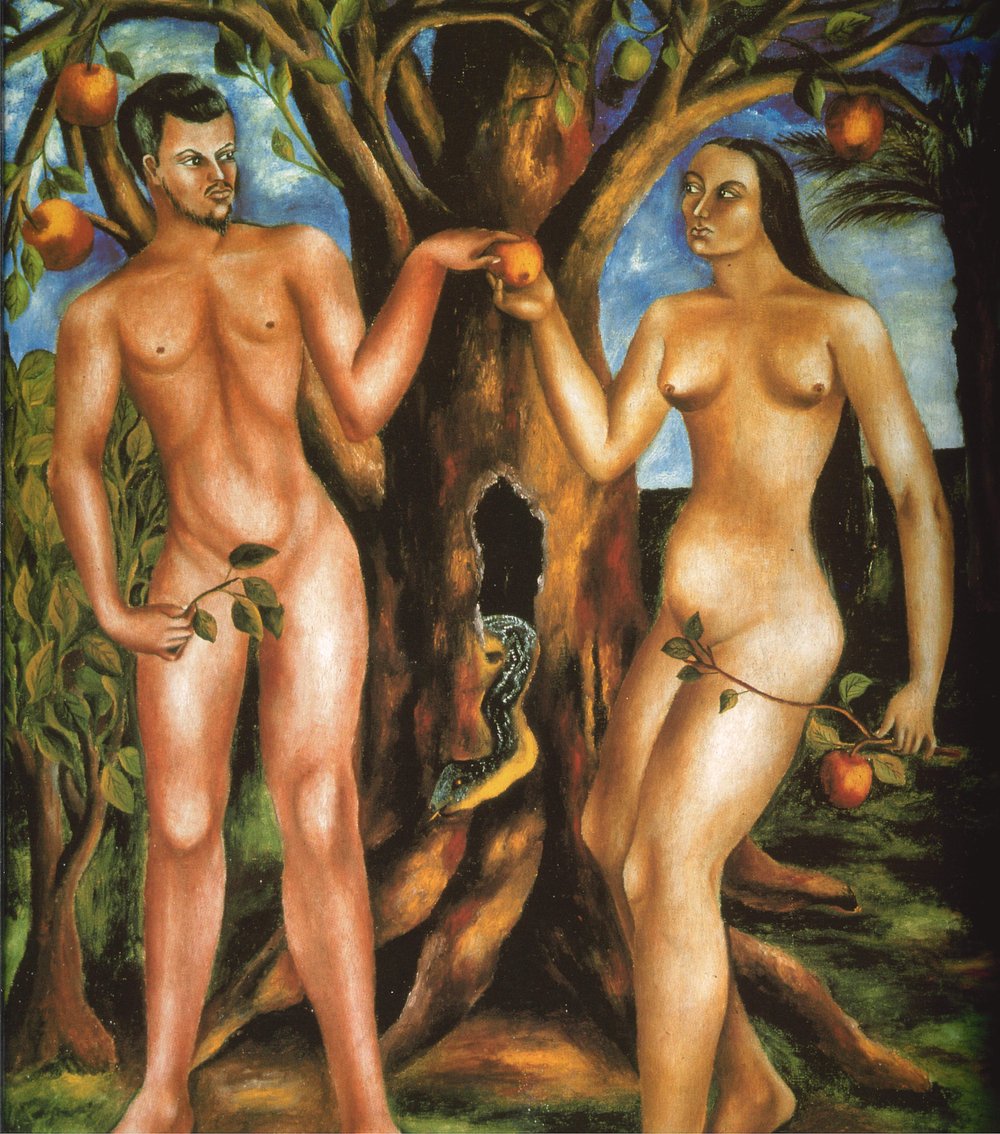
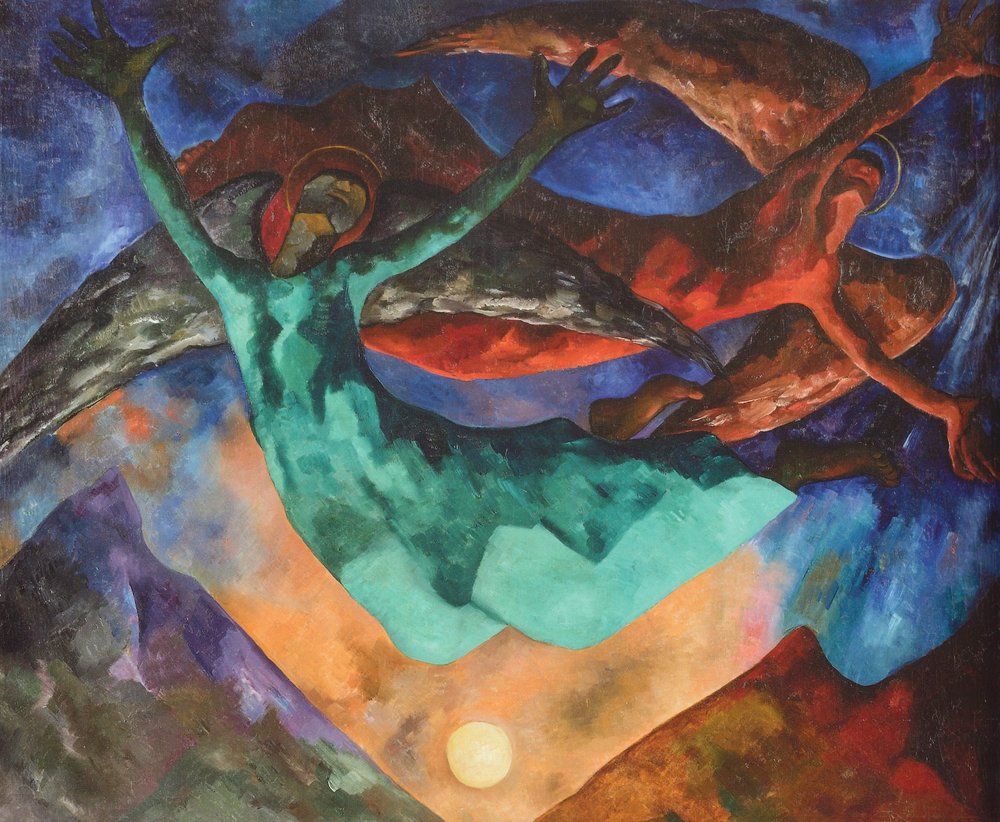
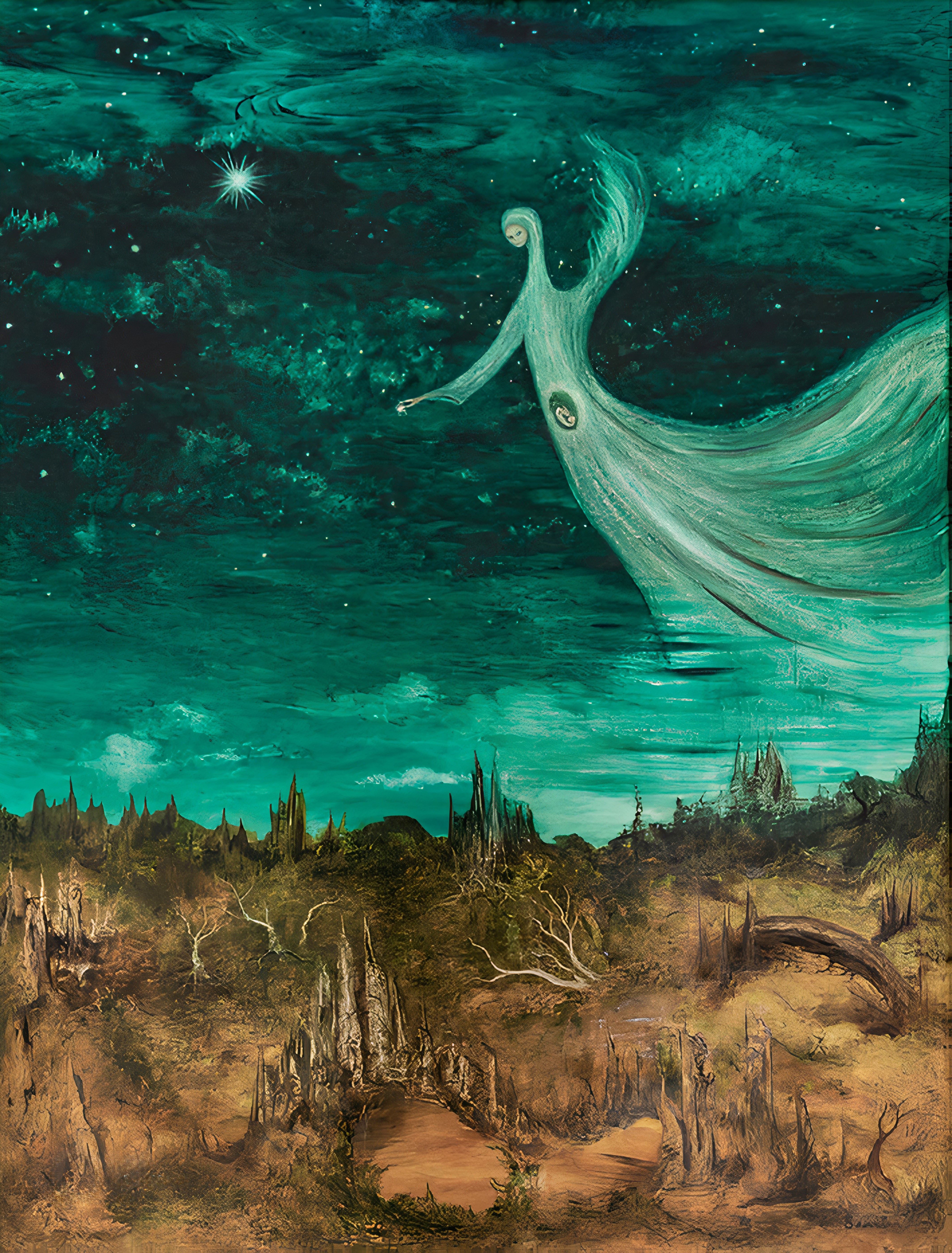
Occult Movements and Mexican Mural Art, a project led by Mariano Villalba, Postdoctoral Fellow, Arts and Spirituality, at the Center for the Study of World Religions (CSWR), brings renewed attention to the underrecognized contributions of early twentieth-century female artists like María Izquierdo, Cordelia Urueta and Sofía Bassi. Rising to fleeting prominence in their time, these women created works that blend esoteric symbolism, psychological depth, and a critical engagement with the spiritual and gendered dimensions of modern life.
Izquierdo alone held more than twenty solo exhibitions and produced nearly 500 paintings. Yet, until recently, her contributions were largely neglected by the art world. In 2002, her work was officially declared a National Artistic Monument in Mexico.
Villalba’s research is part of the CSWR’s Transcendence and Transformation initiative, in collaboration with the Giorgio Cini Foundation in Venice, the Program in the History of Hermetic Philosophy at the University of Amsterdam, and the Warburg Institute at the University of London. We recently sat down with him to discuss his project and the results of his exploration of the lives of these female artists.
CSWR: What is the focus of your postdoctoral research at the CSWR?
Villalba: I’m working on a project about Mexican mural art of the ’20s and ’30s and esotericism. So, the interplay between esoteric currents and Mexican visual arts. I’m focusing on several lesser-known women artists of that period. In my PhD research, I studied renowned muralists like Diego Rivera (1886-1957) and José Clemente Orozco (1883-1949). But now I’m moving to lesser-known women artists like María Cenobia Izquierdo (1902-1955), who moved away from the muralist canon and explored spirituality and more personal topics. I’m also looking at Cordelia Urueta (1908–1995), and more recently, Sofía Bassi (1913–1998), whose work blended surrealism and alchemical symbolism. I’m studying the esoteric influences on these artists who, like many women artists in Europe, are now being reevaluated and reassessed within the canon of modern art. Their engagement with esoteric ideas is finally being taken seriously, and I think this can really help us reconsider the vital roles they played in shaping modern art history.
CSWR: It sounds like your research is launching a rediscovery of the artistic work of these women.
Villalba: Exactly. These artists are well-known in Mexico, but not widely recognized outside of it. For example, María Izquierdo was declared a National Artistic Monument in 2002, and just last year she was exhibited for the first time at the Venice Biennale. So she’s gaining some international recognition. Cordelia Urueta is somewhat known in Mexico as well, though much less abroad, despite having exhibited internationally. Actually, María Izquierdo is the first Mexican woman to have exhibited art in the United States. It was in 1930, along with José Clemente Orozco and other major muralists. Even though these women had a good reputation and were recognized during their time, they ended up marginalized.
That’s the core of my research: trying to understand why that happened. The reasons are complex, but I believe gender and esotericism both played a part. They were marginalized because they were women, but also because they explored these spiritual themes. This kind of spiritual abstraction clearly didn’t fit within the epic and often overtly political tone of the dominant muralist movement, which was overwhelmingly male and focused on revolutionary class struggles. These women explored humanity, spirituality, and topics that didn’t really fit. And because of that, they didn’t get the recognition I think they deserved. Sofía Bassi, for instance, developed a deeply alchemical language that she lived as much as she painted. She’s another example of a woman whose spiritual imagination stood apart from the dominant aesthetics of her time.
CSWR: Can these artists be rediscovered and recognized for their work today?
Villalba: Absolutely. María Izquierdo is a great example. Her inclusion in the Venice Biennale last year was significant, especially since the exhibition aimed to highlight marginalized voices in art history. But another problem is that most of María Izquierdo’s works are now in private collections. There is an interesting story behind this. She was close to the French surrealist poet Antonin Artaud (1896-1948), who took many of her works to Europe. Many of those pieces have since disappeared. She produced almost 500 paintings, most of which are in private collections. This is why it is hard to reassess her work. But I hope that studying her art will also contribute to the reappearance of her artwork. Her paintings are certainly valued, but without broader public access, it’s hard to fully appreciate her legacy.
CSWR: With so many of her paintings in private collections, how can you see the depth of her work?
Villalba: It’s a good question. When she was declared a National Artistic Monument in 2002, it actually caused some tension. Understandably, private collectors don’t want to give up their works. But there are many photographs of the missing paintings. I’ve been working with the María Izquierdo archive at the Museum of Modern Art in Mexico City. Her archive is quite rich; there are many documents, letters and pictures. Izquierdo was the first woman in Mexico to have been commissioned by the government to paint a mural. While the actual mural was never completed, the sketches and drawings still exist. So even when the original works are lost, we still have visual and archival traces to study.
CSWR: How would you classify the works of these women?
Villalba: María Izquierdo is sometimes exhibited as a surrealist, but I think her work is more personal and harder to classify. Cordelia Urueta is more easily placed in the realm of pure abstraction. She didn’t depict traditional Mexican iconography, and her work is rooted in color and form. Sofía Bassi is probably the most esoteric of the three. She saw her art as a form of alchemy, not just in theme but in practice. She even built an egg-shaped sarcophagus where she chose to be buried.
Another important thing is that María Izquierdo was a feminist activist, very active in the feminist cause nationally in Mexico and internationally. Femininity and spirituality are central to her work.
She had a difficult childhood. At one point, while walking with her grandfather, she was trampled by horses. Later, as a young girl, she was kidnapped for a day by circus performers. So, circus and horses became recurring obsessions in her art. You often see women surrounded by circus performers and negative astrological influences over women. It’s very personal, very rooted in her Mexican Catholic upbringing, but also the struggles she suffered as a woman. And she suffered a lot of these struggles because of gender issues. That's also very visible in her art.
CSWR: How are María Izquierdo and the other women artists connected to Mexico’s muralist traditions?
Villalba: It is important to remember that the Mexican muralist tradition wasn’t just an artistic movement but part of an educational project that aimed to create a national consciousness in populations. Art was just a part of this bigger project. Most Mexican artists at that time were concerned with the question of Mexican identity.
In the cases of María Izquierdo and Frida Kahlo (1907-1954), this theme is very present, but intertwined with personal stories that were also marked by tragedy. Izquierdo had a difficult childhood; then, she was forced to marry when she was 14 years old, very young. You can imagine that starting an artistic career with that past, and making your way in the professional world, was really tough for a woman at that time. So, this personal path is really visible in their art.
But it’s also the question of Mexican identity. Kahlo had both Mexican and European roots. Her mother was Mexican, and her father was of German origin. So she represented this blending of Indigenous and European heritage, which became a central theme of Mexican identity.
Izquierdo didn’t quite fit into that. She was from Jalisco, which is on the Pacific coast, far from the cultural centers. She came from a very traditional Catholic family, from a more rural background. So she didn’t really embody the classic mestizo identity that Kahlo did. In a painting, Kahlo is even raised by an Indigenous figure, but she often wears European clothing. It’s this fusion of cultures. Izquierdo’s work doesn’t have that blending in the same way.
Sofía Bassi also painted three murals. Two of them are actually about national themes. So even if her work was more surreal and full of alchemical imagery, she also engaged with the question of Mexico and national identity.
CSWR: In your research, the lives and personal stories of the artists seem to be providing an important backdrop to their works of art.
Villalba: That’s what I like about doing research. My PhD was about a German-Mexican occultist and spy called Arnold Krumm-Heller. He was a double agent during the Mexican Revolution of 1910. He left Germany when he was just fifteen and moved to Latin America. Then his mother died, and he became interested in Spiritualism. He even adopted his mother’s surname, adding "Heller" to his original name, Krumm. So his spiritual interests were deeply personal, tied to early loss and life experience.
I spent a lot of time digging through archives, trying to piece together his personal story. I even contacted some of his descendants. So there's always this blending of personal lives, both theirs and mine. I do research about esotericism, and one of the questions I always come back to is: why were these artists drawn to it in the first place? It’s a very personal question. It’s never easy to answer how we develop our spiritual interests or affiliations. But in Krumm-Heller’s case, you can really trace it back to childhood.
CSWR: How do you think your work intersects within the framework of the CSWR?
Villalba: The Transcendence and Transformation initiative focuses on exploring spirituality and claims of access to higher knowledge. These artists used art as a means to access and express other planes of existence. In the case of María Izquierdo, she claimed to receive influences from spiritual entities, specifically from the pre-colonial Mexican past. Cordelia Urueta was interested in past lives, and Sofía Bassi saw her art as a form of alchemy. So it fits in that direction. Studying these artists contributes to this broader topic of transformation, where art becomes a means of self-transformation and of transcending nationalist narratives about the development of modern art. The idea that artists are only led by formalist decisions has been questioned. Many artists were influenced by spiritual communications or other ways of knowing and producing. And I think, in that sense, it fits the program in Transcendence and Transformation.
To read Villalba's research reflection “Esotericism, Gender, and the Legacy of a Mexican Artist,” visit https://cswr.hds.harvard.edu/news/2025/02/esotericism-gender-and-legacy-mexican-artist.