# Growing a Gardening Movement
## Growing a Gardening Movement
Thinking with Plants and Fungi Conference 2025
Rebecca McMackin, *Arboretum Curator at Woodlawn Cemetery and Thinking with Plants and Fungi Program Associate*

There is a winterberry holly outside of my window. Last December, when the leaves had fallen to reveal fruits so vividly red that they looked like plastic, a flock of cedar waxwings descended on the shrub and stripped it in a day.
The birds knew what they were doing—throwing their heads back and gulping down berries two at a time. They’re familiars: the birds and the hollies go back thousands of years, ever since the shrubs first offered up their seeds, wrapped in irresistibly bright fruits, for dispersal. Waxwings were just one of several species who helped select that crimson red hue and shape the fruits’ nutrient profile over millennia, tailoring them to meet their tastes and nutritional needs. Together with the small carpenter bees who pollinate the flowers and spring azure caterpillars who eat the leaves, the birds and the hollies are entangled in a tight-knit ecological community.
As an ecological gardener, my job is to keep these communities together. I’m part of a massive and growing movement centered around beauty and ecological repair. Ecological gardening is a practice that entangles people within their nonhuman communities and encourages us to embrace our roles as caretakers of the land. It involves interrogating traditional horticultural practices and developing techniques to support wildlife across the diverse biomes and ecoregions in which we work.
Much of that work revolves around cultivating “native plants”—those that evolved on the land we’re working. And as straightforward as it may seem to support these local species, especially those struggling in these tumultuous times, that work—the approach and terminology—is rife with controversy, and rightfully so.
Some people misunderstand the effort to plant natives as an attempt to return to a romanticized, Edenic past—a historical erasure that strives for ecological purity. But this is not the case. We are pragmatists, reckoning with centuries of ecological damage and doing what we can to support what remains. We are working toward a verdant and biodiverse future, one in which the flora, fauna, and funga of our land can not only survive but flourish.
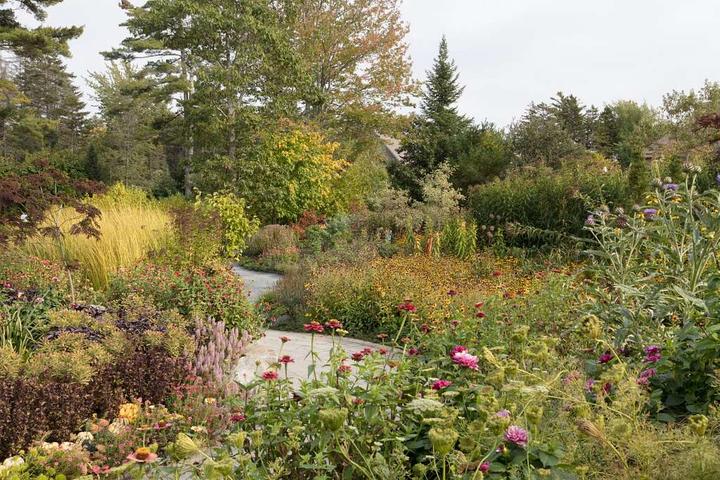
Gardening is an ancient and arguably universal human practice, though it is not often proposed as a solution to massive ecological crises. But amid rapid development, industrial agriculture, and urbanization, every bit of land helps to support plummeting wildlife populations. Butterflies in the United States have diminished 22 percent in just the past 20 years,[1](#references) while global insect populations have declined by nearly by half in the past 40.[2](#references) Researchers estimate that an additional third of insects will disappear from Earth over the next 20 years. It isn’t just rare and delicate species that are dying off; abundant insects—those we think of as relatively common—are declining even faster[.3](#references) These insects feed birds, 30 percent of which have disappeared since the 1970s.[4](#references)
As comforting as it may be to think that these crashing populations might leave us saddened but otherwise unaffected, the biodiversity crisis threatens our way of life. One in every three bites of food that you eat is the direct result of insect pollination.[5](#references) And already, half a million people die every year due to decreased food production from decreased pollination.[6](#references)
Agriculture, climate change, insecticides, imperialism, colonialism, and extractive, objectifying views of the earth are all driving these numbers. As terrifyingly massive and impenetrable as these forces are, supporting local flora is a direct and impactful way to cultivate the world we want to live in.
Last fall, a gardener at Brooklyn Bridge Park planted the bulblets of a small, pink wildflower called spring beauty, hoping to reintegrate this charming wildflower into a postindustrial public park. In April, the flowers bloomed for the first time—and immediately, every patch was visited by the spring beauty mining bee, a tiny, adorable specialist bee who can feed their babies only the pink pollen from this one spring ephemeral. Somehow, the bees found it—amid buildings, highways, and the East River, in the middle of the largest city in the country. This population is currently the only known occurrence of the spring beauty mining bee in all of Brooklyn. They were just missing their flowers.
Providing familiar plants for specialist pollinators is one of the many ways ecological gardeners care for managed land. We question and step away from classical garden practices so that natural processes can play out, even in urban parks, rural farms, and suburban lawns. For example, there’s been a successful campaign over the past decade to “leave the leaves.” They’re literally called *leaves*, after all—we should leave them. It’s a cute slogan for doing absolutely nothing: letting the leaves that fall from trees lay where they land. But the impact of that practice cannot be overstated; it supports entire food webs.
After a butterfly lays her eggs on a leaf and the caterpillar emerges to feed, nearly every species at some point drops to the ground to pupate or overwinter. If you’ve ever seen an inchworm hanging by an invisible thread in the air, it is on its way down to the leaves. When caterpillars land on turf grass or a pile of mulch, their lives are easily cut short. The leaf layer provides them with shelter, insulation, and a whole neighborhood that includes bumble bees, lightning bugs, and countless others. A recent study found that removing leaves from a landscape reduces butterfly and moth populations by 40 percent.[7](#references) The larvae of these missing insects are necessary to feed the nestlings of nearly all North American songbirds. So as insects decline, the birds follow. [8](#references)
Even after leaves fall, they continue to support their trees. Trees are not, in fact, throwing their leaves away in autumn, but carefully placing those leaves over their own root systems, where they break down and build the soils that the trees want to live in. All plants use their leaves, twigs, and roots to terraform the earth in ways that benefit not just themselves, but entire ecosystems, us included. Leaving leaves can help with flood management; freshly fallen oak leaves can hold nearly all of the water from a two-inch downpour.[9](#references) As leaves break down, they become one of the main methods through which carbon is sequestered: Soils of landscapes where leaves have been left undisturbed hold 32 percent more carbon than those in which they were removed.[10](#references) That leaves are ever removed from land reflects a fundamental misunderstanding of the ground itself, which is not a static thing or a place so much as a living process of creation: digesting, cycling, and building life. In the face of ecological collapse, putting down our rakes and leaf blowers is a powerful statement in support of climate stability and biodiversity, and against outdated ideals rooted in domination.
The practice of leaf removal persists because many people equate care for land with tidying—cleaning away the wildness as though the Earth were a living room. That impulse is often rooted in fear: of the judgment of neighbors, of snakes and ticks. But it may also stem from a deeper cause: fear of the unfamiliar terrain a recent European settler would have encountered hundreds of years ago. Carving out a tidy, fenced space to grow familiar foods and flowers became an integral part of settler colonial land theft. Rich ecological systems cultivated by Indigenous peoples were claimed as “unused.” Settlers bound them, tilled them up, and spread introduced birds, bees, and crops.
Early gardens were not just botanical and agricultural, but a curated showcase of cultural dominance. Yards were soon Americanized and industrialized, and they metastasized into the 40 million acres of chemically soaked turf that blankets this country today.[11](#references) Even the prettiest wildflowers, like violets and phloxes, were sprayed away so that lawns—a crewcut of an homage to perpetual control—could dominate.
But it all falls apart when you stop maintaining it. And recently, many have. Left leaves quickly smother turf grass and allow seeds, asleep in the soil, to emerge and grow. As softer, naturalistic gardens have come into fashion, grassy matrices in dynamic landscapes that allow for the movement, growth, and even death of plants grace the covers of magazines the world over. This new aesthetic creates the opportunity for ecological gardeners to incorporate habitat into managed land through dead hedges, stem stubble, soft landings, and many other biodiversity-oriented techniques. All over the world, people are creating and remembering land-care practices that allow gardening to become a process of encouraging and editing rather than a full-tilt imposition.
Still, when we loosen our grip and stop micromanaging, what grows back is not necessarily the flora of this land. Plants from all over the world—brought here as foods, medicines, ornamentals, and hitchhikers—have seeded in. Most are benign, even charming. But the introduction of some of these plants causes incredible ecological damage, enough that they’re consistently listed as one of the top drivers of global biodiversity decline.[12](#references)
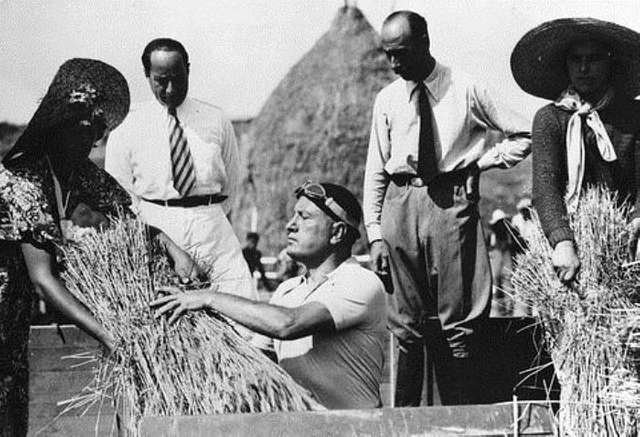
Benito Mussolini (1883-1945) threshing wheat with Italian peasantsThose of us who garden with wildlife habitat in mind make it our business to remove these plants where feasible. In weeding out plants that cause ecological damage, we provide space for those more intertwined in local food webs to thrive. But these acts of stewardship sometimes slide into a politics of exclusion in ways that fan the flames of xenophobia: vilifying foreigners for thriving outside where they “belong.” It’s a rhetorical problem, but also one of approach: some native-plant enthusiasts decry all exotics, implying that “our” land is being invaded by foes from Asia. Laudable goals like supporting interdependent networks, a healthy sense of place, and being of the land are sometimes pushed aside for nationalism. Right-wing gardeners weaponize these practices to foment an ironic “nativism” in garden clubs ostensibly concerned with planting flowers.
And this is hardly a new phenomenon. During the Third Reich, fascist German landscape architects vilified exotic rhododendrons and weaponized the concept of native plants to promote ideologies of racial superiority, also weeding out people labeled “invasive.”[13](#references) They cultivated the concept of landscape “purity” and went so far as to recommend native plants to camouflage foxholes during WWII.[14](#references) Mussolini also flirted with a native plant movement while simultaneously forcing peasants to return to the land,[15](#references) only to starve and kill many of them once there.
In the United States, our colonial legacy renders any claim to nativism by settlers, immigrants, and their descendants fundamentally hypocritical. Yet that hasn’t prevented conservation movements from forcing Indigenous people out of national parks to keep those landscapes “pristine.” John Muir, Teddy Roosevelt, and Aldo Leopold all came to their ecological work from a worldview forged in eugenics and white nationalism. And more recently, an organized effort to spread xenophobia under the guise of “overpopulation” infiltrated environmental groups and nearly toppled the Sierra Club.[16](#references) Eco-fascist ideologies have long attempted to wall off the entire country with fortress conservation, and this history has shaped the ecological gardening movement of today.
So why not rid ourselves of the concept of botanical belonging altogether and welcome neophytes from far and wide to flourish? While this may seem like a politically savvy blanket solution, it would lead to ecological devastation. The history and continuation of colonialism does not absolve us of our responsibility to care for land. Organisms who evolved together depend on one another in profound ways. Currently, these relationships are disrupted by climate change, habitat destruction, and the many downstream effects of extractivist relationships with land. A botanical free-for-all adds to the turmoil, harming many of the plants and animals we love.
Common weeds illustrate the effects of neglecting land when introduced plants begin to spread. Garlic mustard, a knee-high, spicy biennial, was brought to New York in the mid-1800s for use as food and medicine. But it quickly spread to both disturbed and intact ecosystems, outcompeting the plants around it. Its roots emit allelopathic compounds, prohibiting the growth of nearby plants and breaking mycorrhizal connections among trees.[17](#references) Two butterflies, the declining mustard white and the rare West Virginia white, mistake garlic mustard for their host plant, preferentially using it to lay their eggs, only for them to die there.[18](#references)
Purple loosestrife is a European flower imported for its beauty. When it jumped out to wetlands, it displaced longstanding vegetation, but the damage goes beyond the competition for land: Purple loosestrife disrupts longstanding pollination dynamics. Bees and butterflies love those purple blooms—they love them more than the native plants that rely on them for pollination. A study done in Massachusetts found that when purple loosestrife was mown, seed set and reproduction of local wildflowers improved significantly. [19](#references) The choice *not* to plant certain species can be as impactful as what we do select for cultivation.
Cedar waxwings will gorge themselves on many fruits aside from winterberry. They are attracted to the bright red berries of the Himalayan nandina, a common introduced shrub. Each of its berries contains a small amount of cyanide, which doesn’t seem to harm birds with more polite eating habits. But when waxwings descend on the shrubs, that cyanide accumulates in their bodies, killing entire flocks.[20](#references) North American birds will eat the berries from many other introduced plants as well, but exotic fruits are not as healthy for them as those they have selected for and relied on for thousands of years.[21](#references)
Removing these disruptive plants from our land is work that supports ecological networks. But an overly simplistic, nativist frame can disparage people, plants, and even our cause. It’s not unusual to hear gardeners talk about “going to war against Japanese knotweed.” This combative language of “invasive” species obscures the deeper forces behind ecological harm: capitalism, colonialism, and the global horticultural trade. These forces must be named if we are to dismantle them. But instead, the plants themselves are often scapegoated. The United Nations calls invasive species “alien invaders”—a phrase that might be funny, kitschy even, were it not echoed in policies that deport families and imprison immigrants. That language, in this moment especially, is profoundly dangerous.
Other terminology is more accurate. While “introduced” lacks the nefarious connotations of “invasive,” it also reminds us that the plants didn’t choose to come here on their own. Many of them, most in fact, were imported by the horticultural trade,[22](#references) spread and sold for personal profit. But some of these plants arrived as medicines, protected over vast journeys, sewn into the hems of dresses or woven into the hair of enslaved women. They are part of the history of this land now, and while they might need to be removed from certain locations, their importance and uses should be recognized and respected. When gardeners and ecologists advocate eradicating these plants, the goal becomes to erase rather than repair damage, papering over a living history with pretty wildflowers.
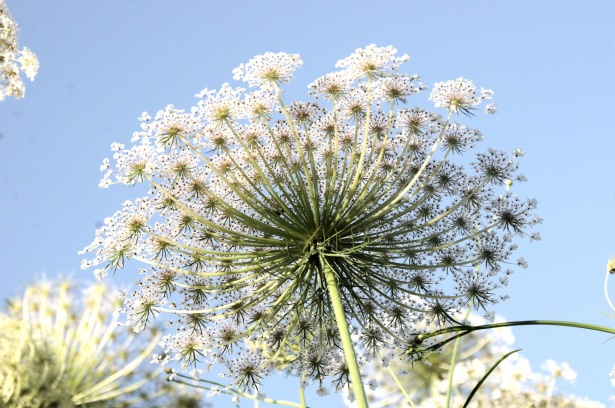
Gardening has never just been about planting flowers. It has always required editing, thinning, and weeding. But it feels dishonorable to kill a plant one doesn’t even know. We should, at least, become intimately familiar with those species we uproot. We can gather garlic mustard for pesto while we pull it. We can weed dandelions and make tea from their roots. The seeds of Queen Anne’s lace were brought here to manage reproductive health. These practices matter, now more than ever.
Nuance is never a popular solution, but it’s necessary. Ecology and history are much more complex than decrying plants as “good” or “bad.” The work of supporting ecological communities can and must happen in a decolonial context. We must grapple with gardening’s role in furthering harmful worldviews and practices, while cultivating perspectives and strategies that support the many organisms whose land this is. The work must extend to the people whose land this is as well—communities disenfranchised from ecological systems they have tended to for thousands of years. As we reckon with the histories of exclusion, extraction, and erasure that have shaped our landscapes, it becomes increasingly clear that ecological gardening cannot be disentangled from questions of justice and sovereignty. The Land Back movement, led by Indigenous communities, calls for the return of land to Indigenous stewardship—not merely as a form of reparative justice, but as a pathway to ecological healing. The work of ecological gardening can become a form of solidarity when it supports broader efforts to restore both land and relationship.
If we care about biodiversity—if we want our children to have butterflies, and even secure food systems—ecological repair is imperative. Planting the plants of this land is a first step but far from the last step. The practice itself, of supporting butterflies and encouraging ancient connections, leads naturally toward an awareness of the interconnectedness of all things. When we plant asters and watch clouds of pearl crescent butterflies flit over our gardens as a direct result, it brings much more than ecological abundance. Gardeners are filled with a sense of belonging and agency. This work is critical for ecological diversity, but it is wildly important for people as well.
Years ago, during a TED Talk, I told the story of planting a small silver plant, pearly everlasting.[23](#references) I relayed how, when I opened the plants’ boxes, American lady butterflies seemed to materialize out of thin air. They flocked to the tiny leaves to lay their eggs. I had to gently brush the butterflies off just to get the plants in the ground. Over the following months, I received countless emails from people who planted pearly everlasting and attracted the butterflies. In doing so, they suddenly realized their role as caretakers within their ecological communities. They were overjoyed. Empowered. Shouting it from the rooftops.
Today, many people feel immobilized by climate grief, disillusioned with political representation, and desperate for meaningful and impactful ways to bring about a healthy world for future generations. Ecological gardening is one such way. It disrupts the myth of environmental isolation. It physically reconnects us to the earth, shaking us out of chronological time and reorienting us toward nature’s cyclical patterns. For many, it offers a revelation that humans need not necessarily be a blight upon the land, as we are led to believe. We can help. We can plant flowers and befriend birds. These small acts constitute a generous and gentle activism based on community and repair. They cultivate awareness and empathy, blossoming through the alienation we are fed every day. I see ecological gardening as the prettiest form of direct action possible.
This is deep and transformative work grounded in hope; it makes sense that a full third of Americans have planted native plants specifically to help wildlife.[24](#references) And we have the land to make a real environmental impact. Private American yards make up an area the size of three Texases,[25](#references) while public parks and gardens add to that substantially. Even people without access to land have a role to play: Research has found that pots of milkweed on a city roof can attract and support monarch butterflies.[26](#references)
Cedar waxwings are named for the scarlet tips of their forewings, which reminded someone ages ago of red sealing wax. The red color is not assured by birth, it’s environmental, sequestered from the carotenoids found in red winterberry fruits, among others. These birds are fundamentally entangled in their environments. So are we. We are inseparable from these ecologies—whether we’re building connections or tearing them apart.
During times of upheaval and fear, people turn toward connection, returning to places and practices that ground them. The busiest week the Brooklyn Botanic Garden ever saw, outside of the cherry blossom festival, was the week after 9/11.[27](#references) And in the midst of the COVID-19 lockdown, more than 20 million people took up gardening for the very first time.[28](#references) Gardening that fosters community heals something deep with us, which is why gardens and gardening get more important when the world is on fire, not less. In these dangerous and unstable times, gardens provide us with opportunities to reimagine the ways we live, in collaboration with one another and with the land itself.
### Author Biography
Rebecca McMackin is an ecologically obsessed horticulturalist and garden designer. This former Loeb Fellow at Harvard was director of horticulture at Brooklyn Bridge Park, where she managed 85 acres of diverse parkland for people, plants, and wildlife focused on cultivating urban biodiversity. As a result, animal species not seen in NYC in decades have established themselves in the park, alongside more than half a million visitors. The Brooklyn Bridge Park's published research has influenced entire urban parks systems to adopt similar approaches. Currently, Rebecca is Arboretum Curator at Woodlawn Cemetery in the Bronx.
McMackin's work has been published by and featured in the New York Times, the Landscape Institute, and on NPR and PBS. She has served on the boards of the Ecological Landscape Alliance, the Torrey Botanical Society, and Metro Hort Group. She holds MScs from Columbia University and University of Victoria in landscape design and biology.
#### Footnotes
1 Colin B. Edwards et al., “Rapid Butterfly Declines across the United States during the 21st Century,” *Science* 397.6738 (2025): 1090–1094. [\[Return to Section\]](#section1)
2 David L. Wagner et al., “Insect Decline in the Anthropocene: Death by a Thousand Cuts” *Proceedings of the National Academy of Sciences* 118.2 (2025). [\[Return to Section\]](#section1)
3 Roel Van Klink et al., “Disproportionate Declines of Formerly Abundant Species Underlie Insect Loss,” *Nature* 628.8007 (2024): 359–364. [\[Return to Section\]](#section1)
4 Kenneth V. Rosenberg et al., “Decline of the North American Avifauna,” *Science* (2019). [\[Return to Section\]](#section1)
5 Alexandra-Maria Klein et al., “Importance of Pollinators in Changing Landscapes for World Crops,” *Proceedings of the Royal Society B* 274 (2006): 303–313. [\[Return to Section\]](#section1)
6 Matthew R. Smith et al., “Pollinator Deficits, Food Consumption, and Consequences for Human Health: A Modeling Study,” *Environmental Health Perspectives* (2022): 303–313. [\[Return to Section\]](#section1)
7 Max Ferlauto and Karin T. Burghardt. “Removing Autumn Leaves in Residential Yards Reduces the Spring Emergence of Overwintering Insects,” *Science of The Total Environment* 970 (2025): 178821. [\[Return to Section\]](#section2)
8 Desirée L. Narango et al., “Nonnative Plants Reduce Population Growth of an Insectivorous Bird,” *Proceedings of the National Academy of Sciences* 115. 45 (2018): 11549–11554. [\[Return to Section\]](#section2)
9 Douglas W. Tallamy, *The Nature of Oaks: The Rich Ecology of Our Most Essential Native Trees* (Timber Press, 2021). [\[Return to Section\]](#section2)
10 Max Ferlauto et al., “Legacy Effects of Long-term Autumn Leaf Litter Removal Slow Decomposition Rates and Reduce Soil Carbon in Suburban Yards,” *Plants, People, Planet* 6.4 (2024): 875–884. [\[Return to Section\]](#section2)
11 Cristina Milesi et. Al, “Mapping and modeling the biogeochemical cycling of turf grasses in the United States,” *Environ Manage* 36.3 (2005): 426-38. [\[Return to Section\]](#section3)
12 Theo E. Werner Linders et al., “Direct and Indirect Effects of Invasive Species: Biodiversity Loss Is a Major Mechanism by which an Invasive Tree Affects Ecosystem Functioning,” *Journal of Ecology* 107.6 (2019): 2660–2672; United Nations Sustainable Development Goals, *UN Report: Nature’s Dangerous Decline ‘Unprecedented’; Species Extinction Rates ‘Accelerating,’* Published online May 6, 2019, . [\[Return to Section\]](#section3)
13 Gert Gröning and Joachim Wolschke-Bulmahn, “The Myth of Plant-Invaded Gardens and Landscapes,” *Études Rurales* 185 (2010): 197–218. [\[Return to Section\]](#section3)
14 See, for example, contributions by Stephen Jay Gould, Jan Woudstra, Joachim Wolsche-Bulmahn, and Gert Grönig in Joachim Wolschke-Bulmahn, ed., *Nature and Ideology: Nature and Garden Design in the Twentieth Century,* Dumbarton Oaks Colloquium on the History of Landscape Architecture 18 (Dumbarton Oaks Research Library and Collection, 1997). [\[Return to Section\]](#section3)
15 Marco Armiero et al., *Mussolini’s Nature: An Environmental History of Italian Fascism* (MIT Press, 2022). [\[Return to Section\]](#section3)
16 James Steinbaur, “A Gardener in the World: Can the Native Plant Movement Outlast Its Scientific and Cultural Critics?” *Bay Nature*, March 21, 2019, . [\[Return to Section\]](#section4)
17 Benjamin E. Wolfe et al., “The Invasive Plant Alliaria Petiolata (Garlic Mustard) Inhibits Ectomycorrhizal Fungi in Its Introduced Range,” *Journal of Ecology* 96.4 (2008): 777–783. [\[Return to Section\]](#section4)
18 Danielle M. Thiemann and Don Cipollini, “The Invasive Plant, Alliaria Petiolata, Is an Ecological Trap for the Native Butterfly, Anthocharis Midea, in North America,” *Insects* 16.4 (2025): 331. [\[Return to Section\]](#section4)
19 Bernd Blossey et al., “Impact and Management of Purple Loosestrife (Lythrum Salicaria) in North America,” *Biodiversity and Conservation* 10 (2001): 1787–1807. [\[Return to Section\]](#section4)
20 Scott Zona, “Fruits of Nandina Domestica Are (Sometimes) Cyanogenic and (Sometimes) Hazardous to Birds,” *Poisonous Plant Research* 5 (2022). [\[Return to Section\]](#section4)
21 Amanda S. Gallinat et al., “Can Invasive Species Replace Native Species as a Resource for Birds under Climate Change? A Case Study on Bird-fruit Interactions,” *Biological Conservation* 241 (2020): 108268; Susan Pagano and Todd Pagano, “The Value of Native and Invasive Fruit-Bearing Shrubs for Migrating Songbirds,” *Northeastern Naturalist* 20 (2013): 171–184. [\[Return to Section\]](#section4)
22 Sarah H. Reichard and Peter White, “Horticulture as a Pathway of Invasive Plant Introductions in the United States: Most Invasive Plants Have Been Introduced for Horticultural Use by Nurseries, Botanical Gardens, and Individuals,” *BioScience* 51.2 (2001): 103–113. [\[Return to Section\]](#section5)
23 Rebecca McMackin, “Let Your Garden Grow Wild.” TED Talk, Atlanta, GA, October 2023, 12 min., 22 sec., [https://www.ted.com/talks/rebecca\_mcmackin\_let\_your\_garden\_grow\_wild](https://www.ted.com/talks/rebecca_mcmackin_let_your_garden_grow_wild) [\[Return to Section\]](#section6)
24 Caitlyn Fallon, “Consumer Gardening Report Finds One in Three People Turning to Native Plants, Gardening for Wildlife,” National Wildlife Federation Press Release, May 2, 2022, . [\[Return to Section\]](#section6)
25 Susannah B. Lerman et al., “Humanity for Habitat: Residential Yards as an Opportunity for Biodiversity Conservation,” *BioScience* 73.9 (2023): 671–689. [\[Return to Section\]](#section6)
26 Karen R. Klinger et al., “Characteristics of Urban Milkweed Gardens that Influence Monarch Butterfly Egg Abundance,” *Frontiers in Ecology and Evolution* 12 (2024): 1444460. [\[Return to Section\]](#section6)
27 Personal communication from Christopher Roddick, head of arboriculture and foreman of grounds at the Brooklyn Botanic Garden, June 5, 2023. [\[Return to Section\]](#section6)
28 Maureen Salamon, “Sowing the Seeds of Better Health: Growing Evidence Fortifies Gardening’s Bumper Crop of Physical and Mental Benefits,” *Harvard Health Publishing*, June 1, 2024, . [\[Return to Section\]](#section6)
#### Suggested Citation
McMackin, Rebecca. "Growing a Garden Movement" in Thinking with Plants and Fungi: Interdisciplinary Explorations of Ecology, Mind, and the More-than-Human World, edited by Rachael Petersen, Russell Powell, and Natalia Scott Schwein. Center for the Study of World Religions, Harvard Divinity School, 2026.