# A Holy Liberty to Act—To Be: Mary Moody Emerson and Margaret Fuller on Self-Actualization
A chance encounter with a historic Denver house leads Noelle A. Baker to uncover an unexpected convergence between Mary Moody Emerson and Margaret Fuller's Transcendentalism and the history of transgender community formation.
March 18, 2026
By Noelle A. Baker, Guest Contributor | Edited by Russell C. Powell
It was summer 2023, and I was shopping at the farmers market in Highlands Square in Denver with my husband, Will Hare. 32nd Avenue is one of our favorite streets. Tucked into a residential neighborhood, it unfurls tantalizingly walkable destinations—eight blocks of restaurants, bars, and boutiques; flower, wine, cheese, pastry, and fresh fish markets; ice cream parlor, coffee house, Japanese-fusion bagel bar, and a friendly vet. At its far end is an old cathedral with stained-glass windows and a banner proclaiming “Love is love.” This declaration from institutionalized religion adds to my affection for 32nd Avenue, even though—as an agnostic—I am even more of a “faithful skeptic” than was Margaret Fuller.[\[1\]](#_edn1)
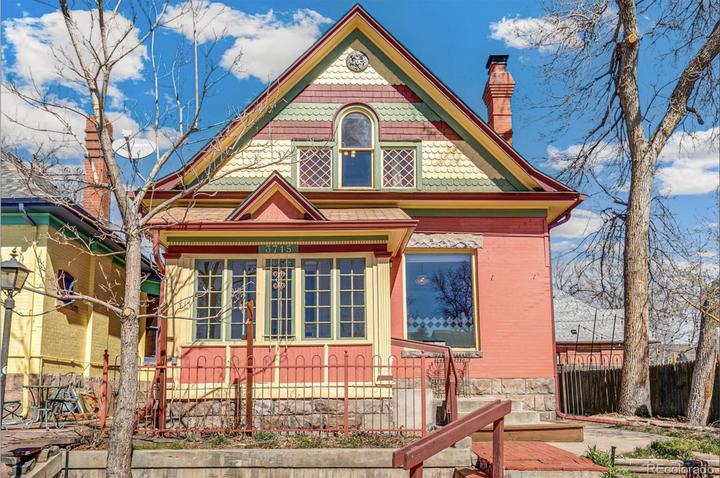
Abruptly interrupting my selection of tomatoes, Will pointed enthusiastically at a Victorian house across the street. “That house is amazing,” he crowed. “I’ve read about it.” I glanced at the ramshackle residence with cracked paver steps, flaking paint, dilapidated stairs, no garage, and a parking space in the neighboring café lot. Amazing? “Hmmm. Not so much that I can see,” I retorted.
“But it’s got history,” he insisted. “It’s on the list of ‘Denver’s 50 Actions for 50 Places.’ And have you ever noticed that Medusa?”
I was aware of Historic Denver’s years-long planning to recognize fifty local structures through quantifiable commemorative actions. In these cases, preservation would amplify “the stories and significance of each place in support of an inclusive, vibrant and rooted city.”[\[2\]](#_edn2) But the Medusa? She had escaped my notice entirely. I was intrigued.
My scholarship treats both Margaret Fuller and the Emerson family, and, with Sandra Harbert Petrulionis, I have also spent over twenty years editing a digital edition of Mary Moody Emerson’s “Almanack” manuscripts. Totaling over one thousand pages, the Almanacks (c. 1804-1858) represent the most extensive example of early-American women’s unpublished intellectual compositions. In addition to schooling her nephew, Waldo, from youth through college, Mary Emerson represents the blockbuster “origin” of Transcendentalism, as Phyllis Cole established thirty years ago, also setting the stage for Fuller’s feminist leadership of the movement.[\[3\]](#_edn3)
Both women disdained cultural and gendered constraints. The self-taught Emerson rejected marriage, in part so she could enjoy the male privilege of property rights. She capitalized on that privilege by purchasing a farm in Maine. Over the next half-century, she read voraciously and composed a multi-genre manuscript series in which she disputed male public critics. In the Almanacks, gendered thought illustrates a seeking identity, as we see in the example of an 1836-1837 Almanack where Emerson celebrates her “belief cradled in time for times holy liberties and immunities to act—*to be*.” Notably, this faith in intellect as a distinct form of tangible action sounds parallel to Ralph Waldo Emerson’s *Nature* (1836), published that same year. Moreover, Mary Emerson drops this statement while comparing her Almanacks with the literary achievements of Dante, Ovid, and Vergil.[\[4\]](#_edn4)
Anticipating aspects of Fuller’s life, Emerson claimed ostensibly “masculine” intellect and its exercise of rights; simultaneously, she discarded behaviors culturally prescribed for women. Emerson and Fuller are not the first women to stretch gendered boundaries in eighteenth- and nineteenth-century America—think only of feminists and free-love activists Fanny Wright and Victoria Woodhull as bookends to this period. That said, Waldo’s aunt and his friend surely influenced Transcendentalist and other cultural estimations of gender.
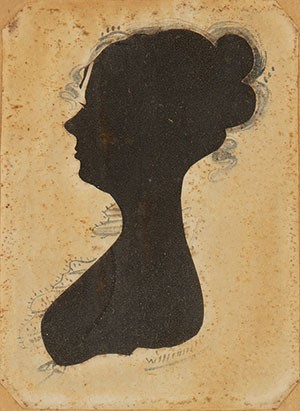
Silhouette of Mary Moody Emerson (1774-1863)Although Mary Emerson exerted choices that aligned her with masculine-encoded characteristics, Fuller advanced that experiment. She chose to travel those paths while also publishing her theories about gender fluidity as it relates to the human condition. This public thought exercise, atypical of the period and not identical to our own assessments, originated in her life experiences. Society labeled Fuller a hybrid Other in childhood and maturity. As her Pulitzer Prize-winning biographer, Megan Marshall, explains, American culture made Fuller “feel painfully divided, as if she possessed ‘a man’s mind and a woman’s heart.’”[\[5\]](#_edn5) Even a pro-Fuller critic like Edgar Allan Poe assessed *Woman in the Nineteenth Century* (1845) as “unmitigated radicalism” with “distorted premises” that neglected “the intention of the Deity as regards sexual differences.” Fuller’s “personal character and her printed books are merely one and the same thing,” Poe concluded, pronouncing Fuller an ungodly distortion.[\[6\]](#_edn6)
I find Fuller compelling because of both the painful struggle and the achievement. I share her determined, but not always successful, attempt to seek “Truth” as a North Star. I champion her epistolary call for professional “Conversations” dedicated to women’s mutual improvement in 1839: “What were we born to do. How shall we do it?” she asked fellow reformer Sophia Ripley.[\[7\]](#_edn7) Likewise, in *Woman in the Nineteenth Century*, Fuller rejects what she calls America’s “great radical dualism,” the cultural tendency, then and now, to attempt to lock gendered characteristics into sealed boxes from which none can escape.
Although I am now an editor of Fuller’s unpublished manuscripts, my interest in her is of long duration. At our wedding twenty-five years ago, I asked Will’s sister Liz to quote Fuller’s extended words on those subjects. At a deeply personal level, they characterize my relationship with Liz’s brother, one in which we mutually respect the spectrum of agencies in each of us: “Male and female represent the two sides of the great radical dualism,” Fuller argues.
“But, in fact, they are perpetually passing into one another. Fluid hardens to solid, solid rushes to fluid. There is no wholly masculine man, no purely feminine woman . . . . Nature provides exceptions to every rule. She sends women to battle, and sets Hercules spinning . . . . Man partakes of the feminine in the Apollo, woman of the masculine as Minerva.”[\[8\]](#_edn8)
In these assertions, Fuller meant for nineteenth-century women to renounce cultural stereotypes, but in 1845, she was also theorizing what in 2026 we call gender fluidity. Addressing the nature of “femality,” she adds, “it is no more the order of nature that it should be incarnated pure in any form than that the masculine energy should exist unmingled with it in any form.”[\[9\]](#_edn9)
\* \* \*
It was spring 2024, and Will and I were shopping again. At 3715 W. 32nd Avenue, the Victorian with the Medusa was for sale. Inside, we examined the oversized, doorless foyer closet and bizarrely long, narrow living room. “A woodburning fireplace,” I exclaimed: “I love it!” “Sometimes the home finds you, instead of the other way around,” my realtor observed; he knew our backstory by then. We wanted to connect to the rough outlines we understood about the house’s past.
In short, from 1983 to 1994, it was the Gender Identity Center (GIC), one of two established Colorado locations known to have contributed to the state’s transgender history. Moreover, an archive of the center’s newsletters, photographs, journals, and financial records was on deposit at the Denver Public Library. The archival researcher in me wanted to know more. GIC members deliberately created that oversized closet and elongated living room (formerly two enclosed rooms) because they needed larger spaces for community gatherings.[\[10\]](#_edn10) The house held an important story and its own truths; they resonated for me as a Fuller scholar and Editor-in-Chief of [*Scholarly Editing*](https://www.scholarlyediting.org/), a journal that amplifies underrepresented voices.
\* \* \*
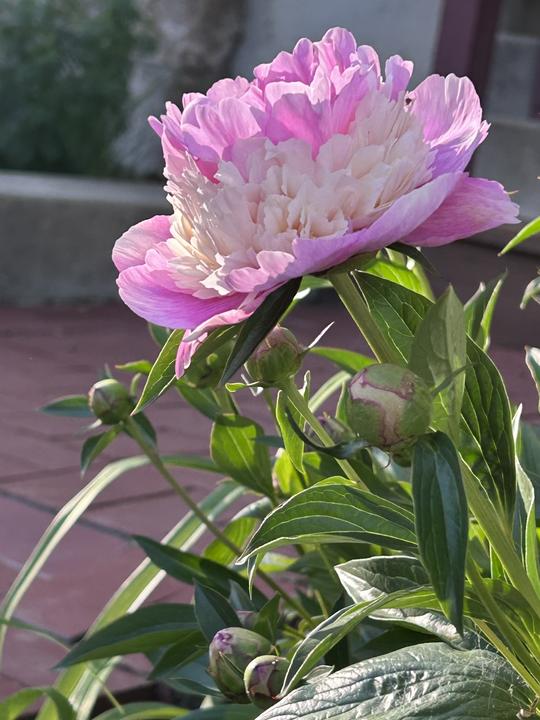
Flower at 3715 West 32nd Avenue. Photo by Noelle A. BakerIt was May 2024, and Will and I purchased 3715 West 32nd Avenue. I emailed Deb Fowler, the Co-Founder and Executive Director of the non-profit [History Unerased](https://unerased.org/), with my news. History Unerased is the premier developer of K-12 curriculum based on contextual materials from LGBTQ-inclusive primary sources, and Deb and her team train educators of mainstream United States history, social studies, and civics classes. I knew she would share my excitement about the house and its archive. “You must talk with David Duffield,” Deb insisted. “He is on my board and lives in Denver.” Deb gave me contact information for Duffield, a historian, educator, and the founder and History Program Coordinator at the Colorado LGBTQ History Project. And talk we did. In addition to sharing an enthusiasm for archival preservation and education, David knew my house, knew of its former inhabitants. He had deposited the GIC archive at DPL. He held the keys to that unique history, and now—through him—I understand it by other names, including “The House with the Green Door,” as contemporaries described its communal shelter.
Transgender people are under threat. Their current lives and past histories are in danger. I am fortunate because [History Colorado](https://www.historycolorado.org/) already had every intention of preserving the memory of the Gender Identity Center (as “Preston House”) with a call to action. In 2025, its officers and History Colorado All Community Engagement Historian/Research Fellow Malinalli X Leyva successfully nominated my house for listing in the Colorado State Register of Historic Properties and the National Register of Historic Places.
During her first Conversation series (1839-1840), Fuller and a circle of women discussed Fuller’s claim that “the man & the woman had each every faculty & element of mind—but they were combined in different proportions.” When Ellen Hooper asked, “if there was any quality in the masculine or in the feminine mind that did not belong to the other,” Fuller rejected that dualism; further, she wished to see if the others fully admitted her reasoning. Offering both a response to Hooper and a challenge that resonates with the threats we face today, Fuller outlined an inescapable logic:
> *Because if all admitted it, it would follow of course that we should hear no more of repressing or subduing faculties because they were not fit for women to cultivate. She desired that whatever faculty we felt to be moving within us, that we should consider a principle of our perfection, and cultivate accordingly.*[*\[11\]*](#_edn11)
The deliberate cultivation Fuller advocated—one that struggles to unfold a perhaps unachievable self-truth and then to release that striving outward as activism—is inherently Transcendentalist in its directive for thought and action; or thought *in* action. As Ulrike Wagner suggests in another context, Fuller was “staging a model of intellectual life in which the poetic, reproductive mind becomes the condition for democratic participation in culture.”[\[12\]](#_edn12)
The resulting self-repose is powerful—and a self-actualization Fuller emphasizes in *Woman in the Nineteenth Century*. “Let us be wise and not impede the soul,” she tells us. “Let her work as she will. Let us have one creative energy, one incessant revelation. Let it take what form it will, and let us not bind it by the past to man or woman, black or white. Jove sprang from Rhea, Pallas from Jove. Let it be.”[\[13\]](#_edn13)
\* \* \*
It was May 2025, and I was watering the peonies and iris out front while farmers market visitors passed back and forth. Like Fuller, I love flowers. A couple and their young daughter ambled by, and the father noticed the Medusa watching from on high. “Do you see that stunning Medusa?” he asked his partner. I shared the story of 3715 W. 32nd Avenue—the House with the Green Door, the Gender Identity Center, and Preston House—all officially honored now as landmarks. May future generations think and act *with* it in mind.
Onward.
**Noelle A. Baker**, an independent scholar, is editor of *Stanton in Her Own Time* (2016) and co-editor of *The Almanacks of Mary Moody Emerson: A Scholarly Digital Edition* and *Margaret Fuller: Collected Writings*. She is editor-in-chief of the open-access journal *Scholarly Editing*.
---
[\[1\]](#_ednref1) “Margaret Fuller’s 1842 Journal: At Concord with the Emersons,” ed. Joel Myerson, *Harvard Library Bulletin* no. 21 (1973): 336.
[\[2\]](#_ednref2) Patricia Calhoun, “Historic Denver Reveals 50 Actions for 50 Places,” *Westword,* 3 August 2021, , accessed 29 January 2026.
[\[3\]](#_ednref3) *Mary Moody Emerson and the Origins of Transcendentalism: A Family History* (New York and Oxford: Oxford University Press, 1998).
[\[4\]](#_ednref4) Noelle A. Baker, ‘Something more than material’: Nonverbal Conversations in Mary Moody Emerson’s Almanacks,” *Resources for American Literary Study*, no. 36 (2012): 50.
[\[5\]](#_ednref5) “The Mind and Heart of Margaret Fuller: Three Editors on Assembling the Definitive Edition of a Singular Voice,” Library of America, 27 February 2025, , accessed 27 January 2026.
[\[6\]](#_ednref6) “The Literati of New York City.—No. IV,” *Gody’s Lady’s Book,* no. 33.8 (1846): 72.
[\[7\]](#_ednref7) *The Letters of Margaret Fuller*, ed. Robert N. Hudspeth (Ithaca: Cornell University Press, 1983), 2:87.
[\[8\]](#_ednref8) *Margaret Fuller: Collected Writings*, ed. Brigitte Bailey, Noelle A. Baker, and Megan Marshall (New York: Library of America, 2025), p. 263.
[\[9\]](#_ednref9) *Margaret Fuller: Collected Writings*, p. 263.
[\[10\]](#_ednref10) Malinalli X Leyva, United States Department of the Interior National Park Service, National Register of Historic Places Registration Form, Preston House, 2025.
[\[11\]](#_ednref11) “Margaret Fuller’s Boston Conversations: The 1839-1840 Series,” ed. Nancy Craig Simmons, *Studies in the American Renaissance*, ed. Joel Myerson (1994): 215.
[\[12\]](#_ednref12) [“Margaret Fuller’s Reproductive Method and the Making of Women’s Voices](https://cswr.hds.harvard.edu/news/2026/02/18/margaret-fullers-reproductive-method-and-making-womens-voices)”; accessed 28 February 2026.
[\[13\]](#_ednref13) *Margaret Fuller: Collected Writings*, p. 264.
See also:- [ Transcendentalism Initiative ](/programming-threads/transcendentalism-initiative)